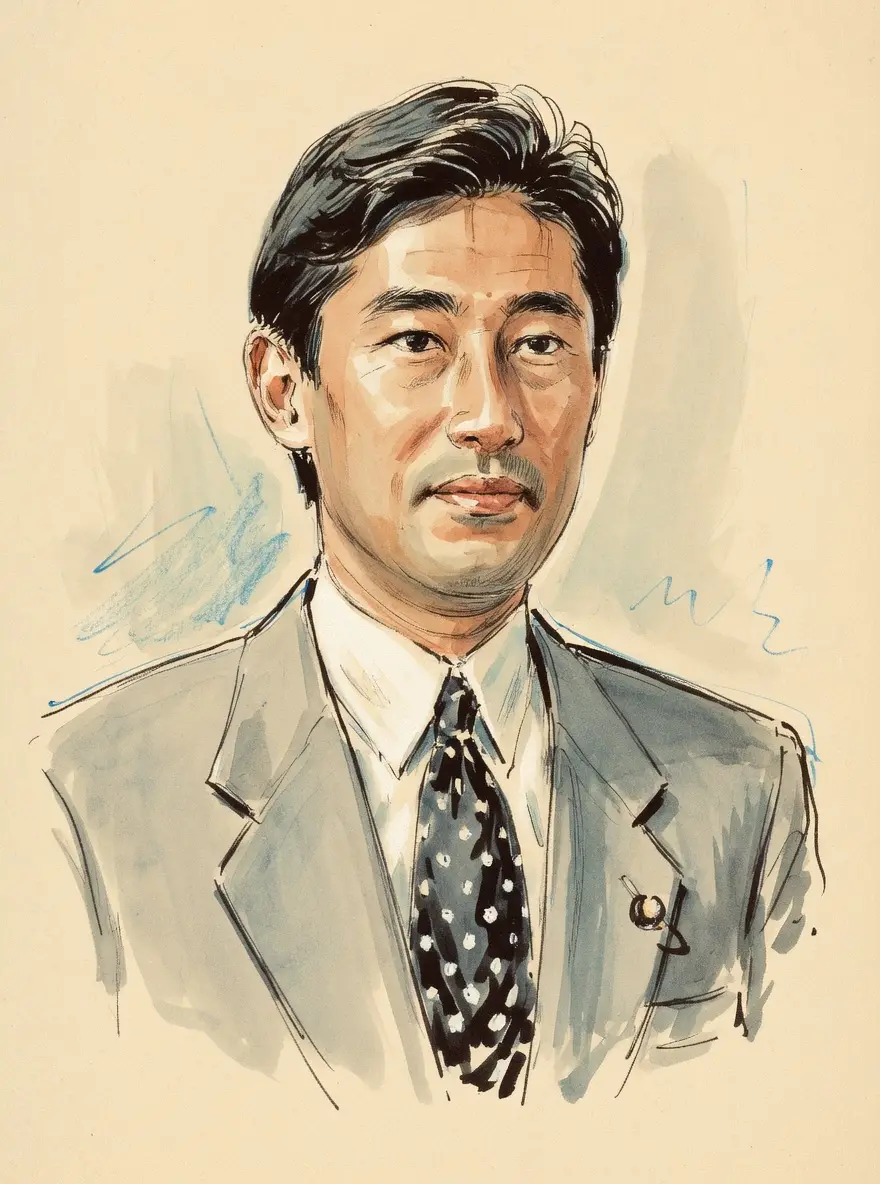
Fumio Kishida on New Capitalism
TL;DR
Fumio Kishida champions a New Capitalism focusing on growth alongside wealth redistribution through public-private cooperation.
Key Points
He introduced the 'Grand Design for New Capitalism' in June 2022, prioritizing innovation, digitalization, and decarbonization alongside wealth distribution.
Kishida initially proposed raising capital gains tax but retracted the plan in October 2021 following a fall in the stock market.
His plan emphasizes a public-private partnership, human capital investment, and fostering local communities as three key keywords for the new model.
Summary
Fumio Kishida introduced his signature "New Capitalism" as the centerpiece of his economic policy upon taking office in October 2021, aiming to create a system where economic growth and equitable wealth distribution form a virtuous cycle. This vision explicitly seeks to reverse the perceived negative effects of neoliberalism, such as widening inequality and environmental strain, by emphasizing a transition where public and private sectors work in concert. Key announced pillars include strategic investment in human capital, fostering innovation and startups, digitalization, and a green transformation (GX). While the initial concept stressed redistribution, political pushback, exemplified by the retraction of a proposed capital gains tax hike, led to a shift toward more conventional growth strategies.
Despite being framed as a successor to the post-war economic model with echoes of past growth plans, Kishida's New Capitalism has been criticized for lacking concrete details or being merely a continuation of his predecessors' policies, such as Abenomics' focus on structural reforms. Implementation challenges arose from resistance by the corporate sector, particularly concerning tax restructuring, and a weak post-pandemic economic recovery with stagnant real wages, which runs counter to the desired virtuous cycle. The strategy's success ultimately hinges on achieving genuine wage growth and structural reform rather than relying solely on government spending packages.
Frequently Asked Questions
Fumio Kishida is a strong advocate for his 'New Capitalism' concept, which he positions as an evolution beyond neoliberalism. His core position is that economic growth must be coupled with a significant redistribution of wealth to ensure societal benefit and sustainable progress. He has established official institutions to develop and implement this vision.
Kishida's New Capitalism implicitly rejects the trickle-down economics and heavy emphasis on shareholder value that characterized his predecessor's Abenomics. While sharing some structural reform aspects, Kishida prioritizes wage growth for vulnerable workers and advocates for public-private collaboration over pure deregulation. Critics, however, suggest the differences are more rhetorical than substantive in practice.
The main components center on strategically investing in human capital, fostering stronger public-private partnerships, and revitalizing local economies, often referred to as his three keywords. Furthermore, the strategy incorporates elements like green transformation (GX) and enhancing economic security.
Sources9
One year in, Japanese PM's 'new capitalism' faces old complaints
EIAS Policy Brief - Kishida New Capitalism.docx
Japan's Kishida championed 'new capitalism', was undone by yen
Kishida's New Capitalism | Phenomenal World
Prime Minister Kishida's New Capitalism - Why Japan Needs Its Implementation
Kishida's New Form of Capitalism | ECGI
Kishida's Legacy of Global Success, Domestic Distress | Carnegie Endowment for International Peace
Kishida's new capitalism raises more questions than it answers | East Asia Forum
For Fumio Kishida's 'new capitalism' to succeed, Japan's PM must offer more than nostalgia - I by IMD
* This is not an exhaustive list of sources.