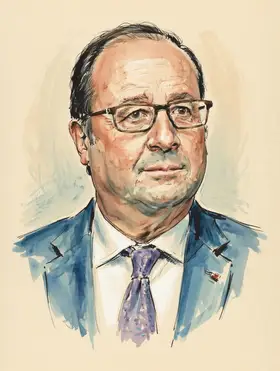
François Hollande on Ségolène Royal
TL;DR
François Hollande's position on Ségolène Royal is defined by their long-term personal and professional association, marked by shared political history and a split.
Key Points
The former couple, who have four children, separated in 2007 shortly before the legislative election.
He backed a rival candidate to Ségolène Royal in the 2008 Socialist Party leadership election, which she narrowly lost.
He appointed her as Minister of Ecology, Sustainable Development and Energy in his government on April 2, 2014.
Summary
François Hollande's position regarding Ségolène Royal is historically rooted in their three-decade-long personal relationship, during which they raised four children and shared a political trajectory within the Socialist Party. The two were a prominent political couple, both graduating from the same class at the ENA, and she was his predecessor as the party's presidential candidate in 2007. Following their separation in 2007, the relationship became strained, with Royal blaming elements including Hollande for her subsequent 2007 presidential election defeat and her narrow loss in the 2008 Socialist Party leadership election where he backed a rival.
Despite the personal split, their professional connection continued, demonstrating a complex post-separation dynamic. Hollande appointed Royal to high-ranking roles in his government, including Minister of Ecology, Sustainable Development and Energy, and she represented France at significant state occasions, suggesting a functional political relationship persisted. Their professional interactions have been marked by periods of public tension following their breakup, but also by appointments that placed her high in the governmental rank, illustrating a continuing, albeit evolved, political connection.
Frequently Asked Questions
François Hollande's position on Ségolène Royal is primarily defined by their past as long-term partners and parents of four children, which evolved into a complex professional association. According to reports, political relations were tense after their separation, though he later appointed her to his cabinet. He has maintained a working relationship despite their personal history.
Yes, he supported her throughout much of her career, as they were a major political couple, according to historical accounts. However, in the 2008 Socialist Party leadership contest, he backed a different candidate against her, which she later cited as a source of tension, as noted in articles about their political dynamics.
It appears his stance has shifted from that of a domestic partner to a political colleague after their separation in 2007, as documented in reports from that era. While there was tension following the split, his subsequent decision to appoint her as a minister in 2014 suggests a professional reappraisal of her political utility, according to historical records.
Sources3
Ségolène Royal
Ségolène Royal, caught in love-triangle tiff, fights tough election battle
Ban Ki-moon (UN Secretary-General), François Hollande (France); Ségolène Royal (France) and President of COP21; and Christiana Figueres (UNFCCC) - Press Conference (22 April 2016)
* This is not an exhaustive list of sources.