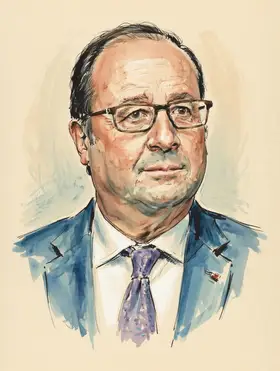
François Hollande on Government Policies
TL;DR
François Hollande's tenure involved a shift toward more business-friendly policies following initial left-leaning commitments.
Key Points
His administration experienced a dissolution of the government in August 2014 primarily over disagreements regarding economic policy direction.
Corporate leaders criticized his initial business policies shortly after his election in 2012, suggesting a need for more market-friendly measures.
The administration faced significant internal conflict over labor reform legislation, exemplified by the contentious El Khomri law proposals.
Summary
François Hollande entered his presidency in 2012 with a platform aligned with the left wing of the Socialist Party, emphasizing job creation and social spending. However, his government's policy direction soon evolved under pressure, particularly concerning economic liberalization and labor laws. This evolution was starkly demonstrated by internal government strife and challenges to the prime minister, leading to the government dissolving and reforming amidst policy disagreements, as noted in 2014.
Facing persistent economic concerns, he subsequently pursued more market-oriented reforms, including policies aimed at improving business competitiveness, which led to friction with the traditional left of his own party. These adjustments, sometimes perceived as a pivot, included proposals like the El Khomri law, which generated significant opposition from unions and parts of the left flank, illustrating a pragmatic but politically costly adaptation in his approach to governing.
Frequently Asked Questions
François Hollande's government pursued policies that evolved from initial left-wing commitments toward a more centrist, business-oriented approach to the economy, according to reports from his tenure. This shift often caused tension within his own Socialist Party, as evidenced by major cabinet reshuffles over economic direction. He generally favored policies aimed at maintaining social cohesion while attempting to improve France's competitiveness.
Yes, François Hollande's stance on economic policies visibly changed during his presidency, according to analysis of his administration's actions. Initially campaigning on a left-wing agenda, he later adopted more market-friendly reforms that clashed with his party's base, as noted by political commentators. This evolution was a defining feature of his governing style.
François Hollande sought to navigate internal political divisions while implementing policies aimed at stimulating employment and improving the nation's economic standing, as reported by news outlets covering his time in office. He defended government decisions against both the far-left of his party and conservative opposition. His administration frequently dealt with policy-driven confidence votes, such as the one scraped through in 2016.
Sources10
France's Socialist government dissolves amid internal feud
The Great Betrayal: How Hollande Betrayed the French Left
France: Prime Minister Valls tenders government resignation to Hollande
In depth: France's political crisis
French government dissolved amid internal feud
France's government resigns amid policy dispute
Hollande's Business Policies Slammed by French Corporate Leaders
French government dissolves over economic policy
Hollande v the corporate giants
Embattled French government scrapes through confidence vote
* This is not an exhaustive list of sources.