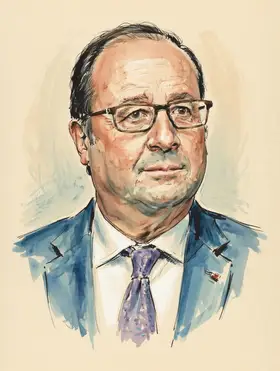
François Hollande on Presidential Approval Rating
TL;DR
François Hollande's presidential approval ratings were a focus in research on diversionary military behavior.
Key Points
Presidential approval ratings were used as the dependent variable to test for a 'rally effect' after France engaged in a militarized interstate dispute.
Analyses covering his time in office suggested that approval ratings were more significantly influenced by economic distress variables, like inflation and unemployment.
A study showed a decline in his popularity after the use of force started in a given month, but the variable was not statistically significant.
Summary
François Hollande's presidential approval ratings were explicitly examined in academic research as a key domestic factor potentially influencing France's decisions to engage in military disputes abroad, as part of diversionary theory analysis. This research sought to determine if low popularity made French presidents, including Hollande, more likely to initiate military action, aiming for a 'rally-round-the-flag' effect. Analyses utilized monthly time-series data spanning his presidency to test this relationship, often finding that popularity was not significantly tied to the onset of serious military force.
Furthermore, the research investigated whether a 'rally effect' occurred after a military dispute began, looking for an improvement in his approval ratings following French interventions. The study suggested that, on average, there was no systematic rally effect for his tenure following the use of force, contrasting with some expectations from diversionary theory. Ultimately, his approval ratings were found to be more strongly influenced by domestic economic factors, such as changes in the consumer price index and unemployment rates, than by foreign military engagement.
Frequently Asked Questions
Research assessing the rally effect found no systematic boost in François Hollande's approval ratings following the start of a military dispute involving the use of force. In fact, for fatal disputes, his popularity was lower the month after, according to an analysis of time-series data.
The main finding was that presidential popularity was not significantly related to the onset of using military force, or in the case of fatal disputes, to the onset of all disputes. This suggested little support for the idea that he might use military action to divert attention from low popularity.
François Hollande's popularity was found to hinge more strongly on the country's economic performance than on military events. Specifically, negative changes in the consumer price index and unemployment were significantly related to a decline in his approval rating.
Sources3
France's militarized interstate disputes: diversion from domestic problems?
Is Hollande another Zapatero? | Spain | EL PAÍS English
Kass: Investors Ignore Politics at Their Peril - TheStreet
* This is not an exhaustive list of sources.