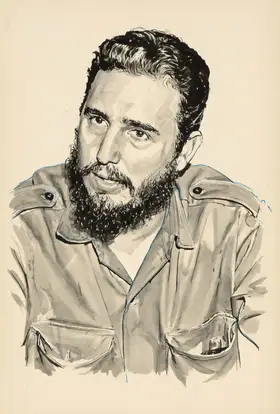
Fidel Castro on Trotskyism
TL;DR
Fidel Castro vehemently condemned Trotskyism, labeling it a vulgar instrument of imperialism and a counter-revolutionary fraud.
Key Points
In his 1966 closing speech at the Tricontinental Conference, Castro devoted a substantial part to an attack on the Trotskyist movement.
The Castro regime suppressed independent Trotskyist political activity, exemplified by the closure of the Voz Proletaria newspaper and the jailing of its members.
Castro's critique of elements associated with Trotskyism often centered on their perceived calls for an armed attack on the US naval base at Guantánamo, which he characterized as dangerous provocation.
Summary
Fidel Castro consistently and forcefully opposed Trotskyism, viewing it as an ideological threat to the Cuban Revolution and its path. His most notable denunciation occurred at the 1966 Tricontinental Conference in Havana, where he mirrored accusations historically leveled by Stalinists, characterizing Trotskyism as "repugnant and nauseating" and a "vulgar instrument of imperialism and reaction". This stance was not merely theoretical; the Castro regime had previously repressed Cuban Trotskyists, arresting members and shutting down their press, viewing their insistence on internal political alternatives as detrimental to revolutionary discipline.
While Castro did not offer detailed, nuanced critiques of Trotsky’s core theories, his attacks were aimed at specific elements of the international Trotskyist movement, particularly those whose positions he perceived as undercutting the Cuban state's authority or aligning with perceived enemies. His sharp condemnation aimed to preemptively discredit any internal or external critique from that tendency, solidifying the official Marxist-Leninist-Cuban nationalist line against a historically significant rival socialist tendency. The intensity of the attack, which drew parallels to the Moscow Trials, indicated the political importance Castro placed on delegitimizing this dissenting revolutionary current.
Frequently Asked Questions
Fidel Castro held a strongly negative and oppositional position regarding Trotskyism, which he deemed a deviation from true revolutionary politics. According to records of his 1966 speech, he denounced the tendency as a "vulgar instrument of imperialism and reaction". This firm stance was consistent with the Cuban government's suppression of domestic Trotskyist groups.
While Castro's official rhetoric was vehemently negative toward the organized Trotskyist movement, some sources note that the Cuban Revolution's early trajectory—particularly its move toward internationalism and opposition to Soviet bureaucracy—was viewed by some Trotskyists as mirroring their own theories, like Permanent Revolution. However, Castro himself attacked the tendency rather than aligning with it.
Fidel Castro delivered one of his most significant public attacks on Trotskyism in January 1966, during his closing speech at the Tricontinental Conference held in Havana, Cuba. He accused organized Trotskyists of working as agents of imperialism and attempting to sow doubt within the revolutionary movement.
Sources10
Ross Dowson on Fidel Castro's attack on Trotskyism—1966
Cuba and Trotskyism's breakdown
Fidel Castro: 'The enemy that threatens Cuba is the same ...
Cuba conference tailors Trotsky to the politics of bourgeois ...
Is Fidel Castro Stalinist, Trotskyist, or something else ...
Trotskyism vs Castroism
Trotskyism and the Cuban Revolution: A Debate
http
* This is not an exhaustive list of sources.