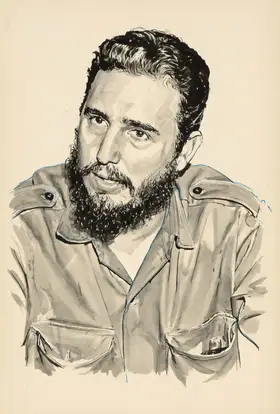
Fidel Castro on Saddam Hussein
TL;DR
Fidel Castro strongly urged Saddam Hussein to withdraw from Kuwait, later criticizing his decisions before the 2003 invasion.
Key Points
In 1973, Fidel Castro met Saddam Hussein in Baghdad when Hussein was Vice-President and Baas Party leader, finding him respectful and friendly.
Cuba voted in favor of the UN resolution condemning Iraq's invasion of Kuwait in 1990, despite the bond of friendship between the nations.
A Cuban doctor reportedly performed back surgery on Saddam Hussein, and a Cuban medical official noted treating him for two decades.
Summary
Fidel Castro's position on Saddam Hussein evolved, marked by direct personal appeals to avoid war in the early 1990s, followed by criticism of his strategic choices leading up to the 2003 conflict. In August 1990, following the invasion of Kuwait, Castro sent personal emissaries with letters advising Hussein to withdraw troops and seek a political solution through the Arab League or Non-Aligned Movement, warning that failure to do so would invite catastrophic imperialist intervention led by the United States and divide the Arab world. Cuba opposed the military solution and was the last nation besides the Vatican to keep its embassy open in Baghdad before the 2003 war.
After the 1991 crisis, Castro expressed that Hussein was caught up in a chain of thought that led to a serious crisis, and he later expressed confusion over the Iraqi military's defense strategy in 2003, wondering why they did not destroy bridges and ammunition depots. Despite this strategic criticism, diplomatic ties remained active, with Cuban doctors providing medical assistance to Hussein for decades, indicating a consistent, albeit critical, relationship between the two leaders, rooted in shared anti-imperialist positions.
Frequently Asked Questions
Fidel Castro strongly advised Saddam Hussein to withdraw Iraqi troops from Kuwait through a negotiated political solution shortly after the invasion in 1990, according to letters from the Cuban archives. He warned that not doing so would invite military intervention by the United States and harm the Third World's international position.
Yes, while Castro offered strong criticism of Hussein's strategic decisions, Cuba maintained diplomatic and cooperative ties, particularly in the health sector. Cuban diplomats were among the last to leave Baghdad before the 2003 invasion, and Cuban specialists had long provided medical treatment to Hussein.
No, Fidel Castro opposed the 2003 US invasion, stating that he told the Iraqi delegation weeks before the war that they should destroy any chemical weapons to aid UN inspectors, though he believed the attack was already decided upon. He saw the subsequent occupation as a source of ongoing conflict and resistance in Iraq.
Sources9
The Letters to Saddam Hussein - MLToday
Iraqi dictator Saddam Hussein hanging out with Cuban dictator Fidel Castro, 1970's. (1719x1290) : r/HistoryPorn
Not able to fetch the provided URL.
Not able to fetch the provided URL.
Not able to fetch the provided URL.
Fidel Castro and Iraq in 1990: Muhsin J. Al-Musawi in Conversation with José C Moya |… | SOF/Heyman
Not able to fetch the provided URL.
Cuba–Iraq relations - Wikipedia
Not able to fetch the provided URL.
* This is not an exhaustive list of sources.