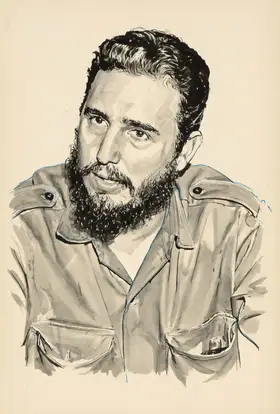
Fidel Castro on Nationalism
TL;DR
Fidel Castro championed a robust Cuban nationalism, primarily defined by fierce anti-imperialism and the pursuit of national sovereignty.
Key Points
The revolution was framed as a 'national liberation, an anti-imperialist revolution' with the goal of removing US influence, as stated in his early revolutionary programs.
Castro drew upon a longstanding tradition of Cuban nationalism, which historian Richard Gott noted was a key theme he kept 'endlessly in play' alongside socialism.
Nationalism was integral to his view that Cuba deserved full sovereignty and that imperialist influence had to be eliminated from Cuban society.
Summary
Fidel Castro was ideologically a Cuban nationalist, a theme that was central to the Cuban Revolution and his subsequent rule. His nationalism was intrinsically linked with an aggressive anti-imperialist stance, particularly directed against the United States, which he viewed as having thwarted Cuban independence and pride through economic domination. This sentiment was a core element used to mobilize popular support, becoming a key rallying cry against the previous Batista regime and external foreign interests. Castro blended his nationalist goals with socialism, seeing the former as a necessary means to achieve national liberation and the latter as the mechanism for true internal equality and development.
The nationalist current in Castro's ideology was not new to Cuba but was given revolutionary force under his leadership, fueling both domestic transformation and a distinctive foreign policy. The revolution itself was characterized as one of national liberation, intended to concentrate efforts on solving Cuba's own problems and concentrating power in the hands of the Cuban people rather than foreign entities. This powerful combination of socialism and nationalism allowed him to maintain domestic popularity, even amid economic hardship, by continually framing national challenges, such as the US embargo, as attacks on Cuban sovereignty.
Key Quotes
the only enemy against whom we are ready to break our lances, is imperialism.
Didn't I tell you?
Frequently Asked Questions
Fidel Castro was a committed Cuban nationalist whose ideology was defined by an anti-imperialist struggle for national sovereignty. He successfully merged this nationalism with Marxist-Leninist socialism to drive the Cuban Revolution and justify his domestic and foreign policies. His stance was consistently positive toward Cuban self-determination and negative toward foreign interference.
Fidel Castro viewed nationalism as the necessary foundation for achieving true liberation and sovereignty for the Cuban people. He saw socialism as the system required to enforce the internal equality and end the economic dependence that he associated with imperialism. He believed that a socialist state provided the mechanism to realize the nationalist goal of a unified, self-sufficient nation.
Yes, Castro's nationalism was heavily focused on resistance to what he termed US imperialism, which he believed had previously stripped Cuba of its independence. He stated after the revolution that his 'true destiny' would be waging a war against the Americans to secure Cuban autonomy. This anti-American sentiment was a constant feature throughout his leadership.
Sources8
Fidel Castro - Wikipedia
Tropical Storm: How Cuba Sent Revolutionary Waves Around the World
Fidel was right: Rise of nationalism exposes liberalism's inherent problem
A STUDY OF FIDEL CASTRO: MOTIVES BEHIND THE CUBAN REVOLUTIONARY
History Will Absolve Me, 1953 (Original): Castro's Nationalism and Revolution
Fidel Castro | Article
Fidel Castro: Life, Legacy, and Impact on Cuba
Cuba: With or without Castro
* This is not an exhaustive list of sources.