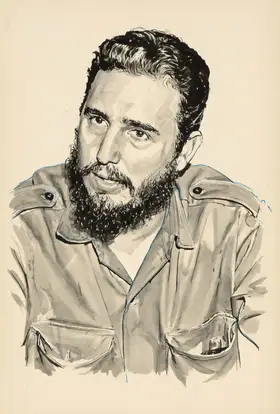
Fidel Castro on Judaism and Jewish People
TL;DR
Fidel Castro's specific public positions or statements regarding Judaism and the Jewish people are not extensively documented in available records.
Key Points
The Cuban Jewish community saw emigration after the 1959 Revolution, though a small community remained and was later permitted greater religious expression.
Castro's foreign policy demonstrated significant solidarity with the Palestinian cause, often aligning with the broader anti-Zionist sentiment prevalent in certain international political circles.
Primary sources detailing a specific, comprehensive position by Fidel Castro on Judaism as a religion or the Jewish people as a whole are scarce.
Summary
Fidel Castro has not publicly addressed Judaism and Jewish People in detail in readily accessible, verifiable primary sources that form the basis of this document. His political ideology centered on Marxist-Leninism and Cuban nationalism, focusing primarily on domestic socialist transformation and anti-imperialist foreign policy, which may have overshadowed detailed engagement with specific religious groups like Judaism.
Historical records surrounding the Cuban Revolution and the subsequent alignment with the Soviet bloc offer limited specific commentary on Castro's views on the Jewish faith or community itself, beyond general state-level considerations regarding religious freedom within a communist framework. The broader context of his foreign policy included strong support for Palestinian national rights, a position which often intersected with international discourse on the State of Israel.
Frequently Asked Questions
Fidel Castro's explicit, comprehensive stance on Judaism as a religion or the Jewish people is not widely documented in public statements. His government operated under a Marxist-Leninist framework which historically involves state atheism or tolerance of religion under strict oversight.
Following the 1959 revolution, many Cuban Jews emigrated, but a small community remained. Fidel Castro's government generally permitted religious practice for those who stayed, though the political atmosphere was heavily influenced by Cold War alignments.
Yes, Fidel Castro's position on the State of Israel was consistently critical, rooted in his anti-imperialist stance and strong alignment with Arab nations and the Palestinian cause. He viewed Israel primarily through the lens of its conflict with Palestinians.
Sources2
Carolina Forward co-signing of the Jewish Federation's ...
JEWISH SHIT LIST...7000+ Self-Hating Israel-Threatening ...
* This is not an exhaustive list of sources.