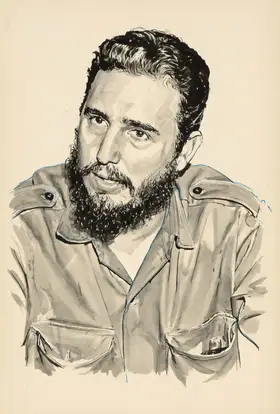
Fidel Castro on Kennedy
TL;DR
Fidel Castro viewed Kennedy as a complex, initially hostile adversary with whom détente became possible before the assassination.
Key Points
Following Kennedy's election in late 1960, Castro sarcastically stated the Cuban government would "wait and see" but expected continued aggressive policy from the new administration.
Castro expressed to a French journalist in November 1963 that Kennedy had the potential to be the "greatest President of the United States" if he achieved coexistence between capitalists and socialists.
Immediately following the assassination, Castro ordered a defensive military alert and expressed apprehension that U.S. policy toward Cuba would become even tougher under the successor.
Summary
Fidel Castro's position on President John F. Kennedy was multifaceted, evolving from initial hostility following events like the Bay of Pigs invasion to a cautious openness toward normalization of relations. Before Kennedy's death, Castro expressed to a journalist that Kennedy "could still be this man," capable of understanding peaceful coexistence between socialist and capitalist systems, suggesting a potential for improved relations after the 1962 missile crisis.
This cautious optimism, however, was mixed with deep-seated resentment over U.S. policy, particularly the Bay of Pigs and covert operations. Upon learning of the assassination on November 22, 1963, Castro immediately recognized the grave implications, stating, "Everything is changed," and later suggested that "ultrareactionaries" in the U.S. might have orchestrated the killing to enable a more aggressive anti-Cuban policy from the new administration.
Frequently Asked Questions
Fidel Castro received the news of the assassination while having lunch on November 22, 1963, and immediately declared, "This is bad news." According to a journalist present, he recognized the profound global impact and stated, "Everything is changed," recognizing the potential instability this created for Cuba.
Yes, Castro believed President Kennedy was moving toward accommodation, especially after the 1962 missile crisis. He told a reporter that Kennedy had "come to understand many things over the past few months" and held the possibility of becoming a great leader who favored coexistence.
In a speech after the event, Fidel Castro suggested that the assassin, Lee Harvey Oswald, might have been a tool of the extreme right wing who disagreed with Kennedy's international policy, insinuating the killing was a reactionary maneuver. He stated that his government had "never in our life heard of him" Oswald.
Sources6
I Was With Fidel Castro When JFK Was Assassinated
Did Castro Okay the Kennedy Assassination?
622. Despatch From the Embassy in Cuba to the Department of State
JFK and Castro | Cigar Aficionado
DAILY SUMMARY CENTRAL INTELLIGENCE AGENCY
Was Castro Behind the JFK Assassination?
* This is not an exhaustive list of sources.