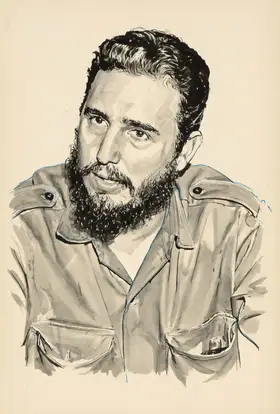
Fidel Castro on Islam
TL;DR
Fidel Castro's view of Islam was defined by his alignment with Muslim leaders who opposed US imperialism and promoted social justice.
Key Points
The Cuban government initially instituted prohibitions on religion after the 1959 revolution, which impacted organized Muslim practice.
He maintained strong political ties with Iranian leaders, who viewed his resistance to the US as aligning with Islamic values, as seen in a May 2001 meeting.
There are reports that former President Fidel Castro had promised to build a mosque for Cuba's Muslim community.
Summary
Fidel Castro, the leader of the Cuban Revolution, did not express detailed theological views on Islam but framed his relationship with Muslim-majority nations and leaders through the lens of anti-imperialism and solidarity with the oppressed. His government's initial establishment of a communist state included prohibitions on religion, leading to a period where public religious expression was suppressed, though this later eased. However, his political stance often led to positive diplomatic and symbolic engagement with figures and movements that held Islamic beliefs, particularly those challenging the United States, whom he viewed as embodying global arrogance.
This practical alignment superseded strict ideological constraints, as evidenced by his warm reception in Iran, where he was praised by the Supreme Leader for his resistance to US domination. Furthermore, his global revolutionary solidarity, which involved sending Cuban aid workers and soldiers to developing nations, was seen by some Islamic political figures as embodying the spiritual and ethical duties inherent in Islam, regardless of his personal atheism. The emphasis was consistently on shared struggle for justice rather than religious doctrine.
Frequently Asked Questions
Fidel Castro's primary engagement with Islam was political rather than theological, focusing on solidarity with leaders and movements who opposed US imperialism. He viewed shared struggles against 'arrogant powers' as the key affinity, as stated during his meeting with the Iranian Supreme Leader in 2001. His own ideology was Marxist-Leninist, but he recognized and respected the anti-imperialist sentiments within the Islamic world.
Yes, reports from international aid groups suggest that Fidel Castro promised to build a mosque for the growing Muslim community in Cuba. This indicates a level of official accommodation for the religion later in his governance. The first mosque in Havana, the Abdallah Mosque, was eventually inaugurated in 2015 with Turkish funding.
Certain Muslim political figures and intellectuals viewed his revolutionary spirit and commitment to social service as deeply aligned with the ethical core of Islam. For instance, Minister Louis Farrakhan stated that Castro embodied the service to people that is central to the faith. This perspective often overlooked Castro's self-identification as an atheist.
Sources8
Islam in Cuba - Wikipedia
Fidel Castro, a leader who relied on his people and they admired him: Ayatollah Khamenei - Tehran Times
Islam thrives in communist Cuba | wtsp.com
Words of Ayatollah Khamenei to our Commander in Chief Fidel, during their meeting in Tehran in May 2001.
Minister Louis Farrakhan's defense of Fidel Castro and the Cuban Revolution : r/progressive_islam
Fidel Castro's lasting legacy in the Middle East | Middle East Eye
Letter to Commandante Fidel Castro - NOI.org Official Website
Red Islam - Hood Communist
* This is not an exhaustive list of sources.