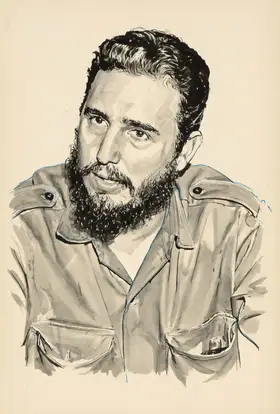
Fidel Castro on Education
TL;DR
Fidel Castro viewed universal, free education as a fundamental right and a revolutionary pillar necessary for national freedom and dignity.
Key Points
In 1961, he declared the year the 'Year of Education' and launched the national Literacy Campaign to eradicate illiteracy.
He asserted in 1961 that questioning the revolution's basic tenets was unacceptable, stating, 'inside the revolution -- everything; outside the revolution -- nothing.'
The government under his leadership made tuition-free preschool through university education available to all who were eligible.
Summary
Fidel Castro considered education a crucial element of the Cuban Revolution, seeing it as both an inalienable human right and a shared social responsibility to ensure a prosperous and free future for the nation. Following the 1959 triumph, one of the first major initiatives he championed was the sweeping 1961 Literacy Campaign, designed to eradicate illiteracy, particularly in rural areas, by mobilizing hundreds of thousands of volunteer teachers. He stated that a revolution was inseparable from a great revolution in the educational arena, believing that a cultured populace guaranteed the nation's true liberty and that technical knowledge should become the heritage of all mankind.
The campaign aimed not only to teach reading and writing but also to break down social barriers by forcing urban and rural sectors to interact, instilling collective identity, revolutionary consciousness, and values like social justice and anti-imperialism through politicized educational materials. He emphasized the need to develop a scientific pedagogy that encouraged thinking over rote learning, and he continuously promoted the expansion of schooling beyond basic literacy, ensuring that teachers held high social recognition and that education—from preschool through university—remained free and accessible to all eligible citizens, even amidst severe material shortages.
Key Quotes
So we will turn this military city into a school attended by hundreds of children, because our barracks are among the people, our Revolution is defended by the people!
inside the revolution -- everything; outside the revolution -- nothing.
Frequently Asked Questions
Fidel Castro's primary goal was to establish education as a fundamental right and a tool for social transformation, aiming to create a cultured populace capable of ensuring the nation's true freedom. He tied educational advancement directly to the success and development of the revolutionary project itself, according to historical accounts.
Fidel Castro initiated the highly mobilized Cuban Literacy Campaign in 1961, which involved closing schools for nearly a year so students could volunteer as teachers for illiterate adults. This massive effort reportedly reduced the national illiteracy rate significantly, leading to Cuba being declared free of illiteracy by the end of that year.
Yes, ideological control was a key aspect, as he defined the acceptable parameters for debate by asserting that criticism must remain within the revolution's framework. Access to higher education and state privileges were linked to adhering to the official state ideology and interests.
Sources10
Fidel Castro and education: A living legacy in the year of his ...
Education - Cuba Platform
Fidel Castro's Message To The Students By ...
The Cuban Revolution: Made by teachers and students
Intellectual and Academic Freedom in Cuba - state.gov
Cuban literacy campaign
No, Fidel Castro Didn't Improve Health Care or Education ...
TIL in 1961, Fidel Castro closed Cuban schools for a whole ...
The philosophy of education in Fidel Castro as a tradition ...
🚨 1961: CUBA SHUTS DOWN SCHOOL FOR A YEAR ...
* This is not an exhaustive list of sources.