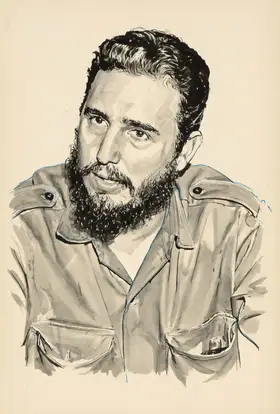
Fidel Castro on Cuban Missile Crisis
TL;DR
Fidel Castro strongly supported the deployment of Soviet nuclear missiles on Cuba as a necessary defense against potential US invasion.
Key Points
Castro presented his 'Five Points' to the Soviet Union, demanding a halt to any deal that did not include a guarantee of Cuban sovereignty and the cessation of US aggression.
He reportedly told the Soviet Ambassador that the missiles should be fired if the US invaded, reflecting an acceptance of nuclear conflict to defend the island.
Fidel Castro stated in 1992 that he had welcomed the missiles as a necessary defensive measure against anticipated US military action against the Cuban state.
Summary
Fidel Castro’s position during the Cuban Missile Crisis centered on the absolute necessity of the Soviet strategic nuclear deployment as a deterrent against an anticipated and imminent United States invasion of Cuba. He viewed the presence of the intermediate-range ballistic missiles (IRBMs) as the only credible guarantee of Cuban sovereignty and the survival of his revolution against overwhelming US military superiority. In communications during the crisis, Castro urged the Soviet leadership to consider a preemptive nuclear strike against the US if an invasion seemed unavoidable, reflecting the extreme existential threat he perceived the island faced during those tense October days in 1962.
Following the resolution, which involved the withdrawal of the missiles in exchange for US assurances and the removal of US missiles from Turkey, Castro expressed disappointment that he was not adequately consulted by the Soviet leadership regarding the final agreement. He later reflected on the crisis, emphasizing that he had welcomed the missiles as a means to protect the nation against further American aggression, even if it brought the world to the brink of nuclear war. His stance solidified the view that Cuba's defense rested on a strong alliance and a significant military capability capable of deterring a superpower.
Key Quotes
The Soviets had that concern, and we naturally had the same concern.
Frequently Asked Questions
Fidel Castro's core position was that the Soviet placement of nuclear missiles on Cuban soil was a vital and necessary measure to deter a likely United States invasion. He believed this strategic placement was the only way to guarantee the survival of the Cuban revolution against US military threats, according to historical accounts. He later expressed disappointment over the final deal struck between the superpowers.
No, Fidel Castro was reportedly displeased and felt excluded from the final resolution reached between the US President and the Soviet Premier. According to reports, he was not fully consulted regarding the withdrawal of the missiles, leading to a tense moment in Cuban-Soviet relations. He later explained that he viewed the missiles as an essential part of Cuban defense.
During the height of the crisis in October 1962, Fidel Castro was prepared for a nuclear exchange if the US chose to invade the island, as documented in various communications. He felt the existential threat to Cuba was so high that nuclear defense was the only acceptable alternative to invasion. He recalled these events years later, emphasizing the high stakes involved.
Sources5
Castro Commentary, January 1992 Cuban Missile Crisis Conference, Havana, Cuba, About His Role
Document 2: Letter from Fidel Castro to Nikita Khrushchev, October 26, 1962
Cuban Missile Crisis, 1961–1968
Prime Minister of Cuba Fidel Castro
1985 interview: Castro spoke of fearing U.S. invasion
* This is not an exhaustive list of sources.