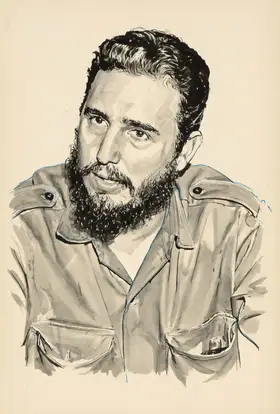
Fidel Castro on Assata Shakur
TL;DR
Fidel Castro consistently defended Assata Shakur, providing her political asylum and championing her cause against U.S. extradition demands.
Key Points
He maintained Cuba’s position of refusing the extradition of Assata Shakur to the United States despite repeated requests.
Fidel Castro specifically called for a mass demonstration in May 2005 in defense of Shakur and against the U.S. government.
His administration officially granted political asylum to Shakur after she escaped from prison in 1979.
Summary
Fidel Castro consistently and strongly defended Assata Shakur, granting her political asylum in Cuba following her escape from a U.S. prison sentence. He viewed her presence as a matter of international solidarity, framing her case as a struggle against American injustice and imperialism, often using her story to highlight perceived flaws in the U.S. justice system. Castro’s administration officially protected her from extradition requests made by the United States government for decades.
His defense of Shakur was a key component of Cuba’s broader diplomatic strategy involving Black American activists and radicals, suggesting that the island nation served as a sanctuary for those oppressed by American policies. This stance involved public statements and organizing support for her, including calling for demonstrations on her behalf. The Cuban government's refusal to surrender her remained a consistent point of friction in U.S.-Cuba relations throughout Castro's long tenure as the island's leader.
Key Quotes
"They wanted to portray her as a terrorist, something that was an injustice, a brutality, an infamous lie"
Frequently Asked Questions
Fidel Castro's position was one of staunch defense and political protection for Assata Shakur, according to Cuban government records. He viewed her as a political refugee who was unjustly persecuted by the United States government. He used her case to criticize American politics and maintain an international stance of defiance.
Yes, Fidel Castro's government provided refuge to Assata Shakur, granting her political asylum in Cuba, as confirmed by reports on her life in exile. This act meant that Cuba officially sheltered her from U.S. law enforcement seeking her return. The asylum remained in place throughout the remainder of Castro's leadership.
Fidel Castro defended Assata Shakur as part of a broader revolutionary solidarity with Black American activists and a challenge to U.S. foreign policy, according to statements from Cuban officials. He framed her situation as a political struggle rather than a criminal matter. He publicly called for demonstrations to support her cause, as noted in media coverage from the 2000s.
Sources4
Fidel Castro Defends Assata Shakur, Calls for Mass Demo May 17
Castro on Assata Shakur
Fidel Castro Letter to Assata Shakur
A Fugitive's Freedom: Assata Shakur's Exile in Cuba
* This is not an exhaustive list of sources.