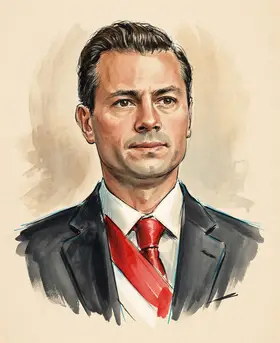
Enrique Peña Nieto on Infrastructure Development
TL;DR
Enrique Peña Nieto made infrastructure development a core priority, announcing massive spending to transform key sectors like energy and transport.
Key Points
Announced a National Infrastructure Program 2014-2018 with an investment target of $590 billion over four years.
The 2013 constitutional energy reform, enacted under his tenure, aimed to end the oil monopoly and encourage private sector infrastructure investment.
Flagship transportation projects included the Mexico City-Querétaro high-speed rail and the design/launch for the new Mexico City International Airport.
Mexican railway concessionaires were expected to see an increase in oil industry-related traffic due to his energy reform.
Summary
Enrique Peña Nieto viewed infrastructure development as the necessary next step to capitalize on major economic reforms initiated during his presidency. Following the completion of structural reforms in areas like energy and telecommunications, he positioned infrastructure investment as crucial for translating those legislative changes into tangible economic benefits for the Mexican population. Key evidence of this stance was the announcement of a massive four-year plan, the National Infrastructure Program 2014-2018, which earmarked approximately $590 billion for hundreds of projects spanning energy, transportation, communications, and more.
This comprehensive plan emphasized a significant role for public-private partnerships, utilizing a recently enacted law to provide greater legal certainty to private investors. The investment was strategically aimed at improving areas where Mexico lagged globally, such as transportation networks, to enhance national competitiveness. Flagship projects announced included the landmark new Mexico City International Airport, as well as significant investments in high-speed rail and energy pipeline expansion.
Key Quotes
Despite a complex international economic context, infrastructure continues to be a key priority for the country with 28 motorways and 58 highways having been completed since 2012.
Frequently Asked Questions
The main goal for Enrique Peña Nieto's administration was to use infrastructure investment as the critical next step to realize the economic benefits of the major structural reforms they had passed. He saw it as essential for boosting national competitiveness and improving the daily lives of Mexicans.
The announced infrastructure plan was structured to rely on both public and private capital. He emphasized the importance of the federal public-private partnership law to give developers greater certainty, with the government covering about 63 percent of the costs and the remainder expected from private investment.
His administration prioritized several landmark projects, most notably the construction of a new, large-capacity international airport for Mexico City. Other key areas included modernizing the rail network with projects like the Mexico City-Toluca and Mexico City-Querétaro high-speed trains, alongside energy infrastructure like gas pipelines.
Sources10
Mexico Update: Infrastructure Plans Unveiled | AS/COA
Interview, President Enrique Peña Nieto: Interview, : Interview - Mexico 2017 - Oxford Business Group
Executive Summary Mexico has undertaken significant reforms over ...
Mexico - Jose Maiz Mier, the late founder of Constructora Maiz Mier - The Worldfolio
The Interoceanic Corridor of Mexico's Isthmus of Tehuantepec and the North-South Development Gap | Baker Institute
U.S.-MEXICO HIGH LEVEL ECONOMIC DIALOGUE - PROGRESS REPORT
Mexican rail infrastructure targeted for improvement - Tecma Group
The Development of the ICT Landscape in Mexico: Cybersecurity ...
Potential Impacts of Mexico's Energy Reform on the Texas Transportation System
How a New Infrastructure Plan Could Help Build Mexico's Future - Knowledge at Wharton
* This is not an exhaustive list of sources.