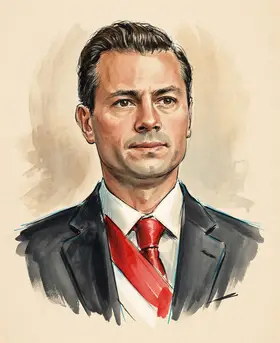
Enrique Peña Nieto on Political Ideology
TL;DR
Enrique Peña Nieto's political ideology is best characterized as centrist and technocratic, emphasizing market liberalization and institutional modernization.
Key Points
His presidency was defined by the push for structural reforms in key areas like energy and telecommunications, promoting economic openness.
He belonged to the Institutional Revolutionary Party (PRI), which historically occupies the political center but shifted toward market liberalization under his leadership.
His government's approach was generally pragmatic and reform-oriented, focusing on institutional changes rather than strong ideological crusades.
Summary
Enrique Peña Nieto's political ideology is anchored in the center-right of the Mexican political spectrum, largely reflecting the historical stance of his Institutional Revolutionary Party (PRI). His administration promoted a pragmatic, technocratic approach to governance, focusing heavily on implementing major structural reforms aimed at liberalizing the economy and modernizing state institutions. This platform was characterized by a commitment to free-market principles, exemplified by key initiatives like the energy and telecommunications reforms, which sought to open previously protected sectors to greater private and foreign investment.
This ideological orientation positioned him as a modernizer in contrast to the rising left-wing populist movement that would follow his tenure. While operating under the PRI banner, which has a complex history, his policy decisions under his presidency leaned toward neoliberal economic policies rather than staunch nationalism or protectionism. The impact of his ideological leanings is often viewed through the lens of his legislative success in passing sweeping economic changes, which some viewed as necessary modernization while others saw as ideologically driven privatization.
Frequently Asked Questions
Enrique Peña Nieto's position is generally characterized as centrist and technocratic within the Mexican political context. He championed market liberalization and institutional modernization as core tenets of his governance strategy. His ideological stance guided the implementation of significant economic reforms during his time as president.
He leaned toward the center-right of the spectrum, advocating for policies that encouraged private investment and global integration. His administration prioritized technocratic solutions and market-based reforms over more state-controlled or populist approaches. This distinguished his governing ideology from the rising left-wing movements in Mexico.
The key elements included significant structural reforms aimed at liberalizing key sectors of the Mexican economy, such as energy. He pursued a pragmatic agenda focused on modernizing state institutions and fostering international economic engagement. His ideology supported these market-oriented changes as essential for national development.
Sources4
Times of Crisis: A Comparative Discourse Analysis of U.S. ...
Understanding the PRI's Comeback in Mexico
Explaining the Party Unity of Governing Parties in Mexico
Mexican Views of the U.S. Turn Sharply Negative
* This is not an exhaustive list of sources.