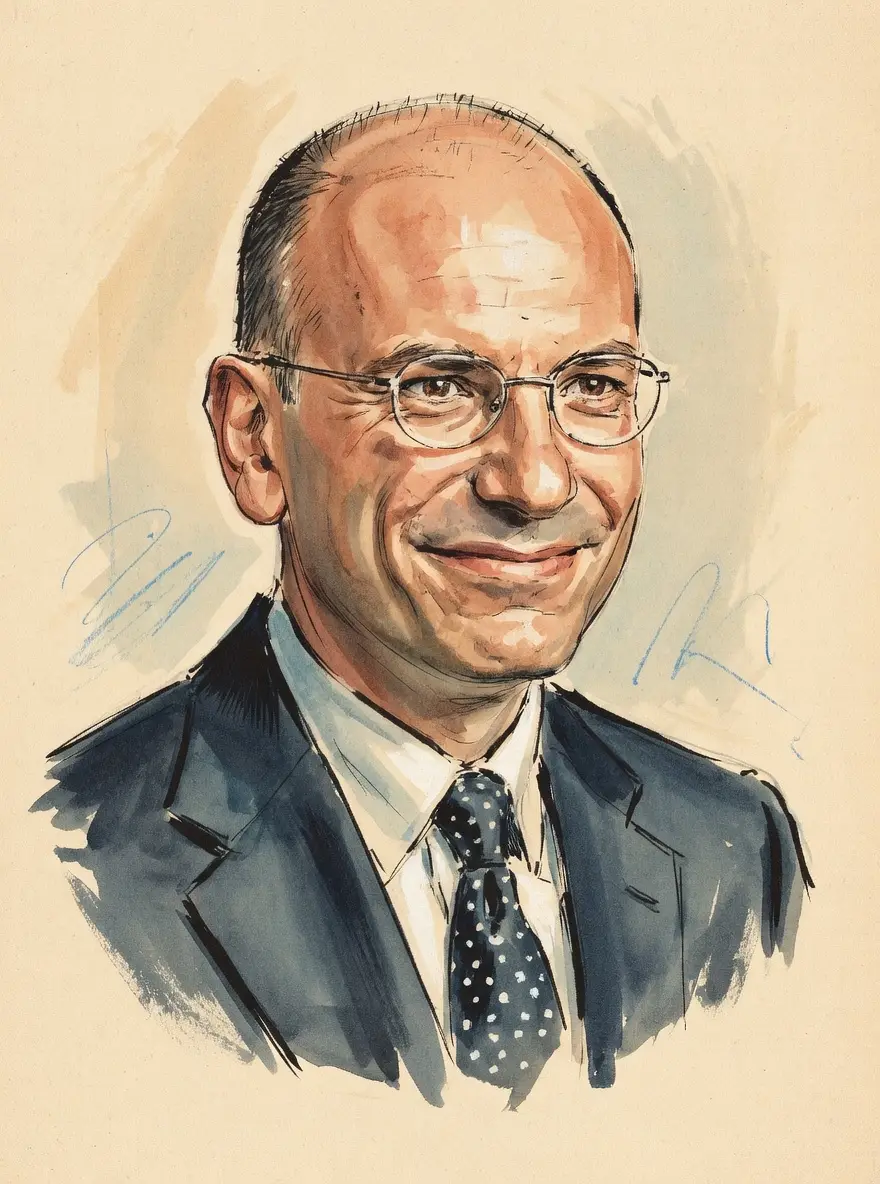
Enrico Letta on Matteo Renzi
TL;DR
Enrico Letta's position reflects his ousting as Prime Minister by Matteo Renzi in a swift political maneuver.
Key Points
He resigned as Prime Minister in February 2014 following a loss of confidence within his party.
Days before resigning, he defied calls to step down, surviving a confidence vote despite internal pressure.
His exit made way for Matteo Renzi to assume the premiership without a general election.
Summary
Enrico Letta's primary association with Matteo Renzi stems from the February 2014 political showdown that resulted in Letta's resignation as Prime Minister. Letta faced a challenge to his leadership from within his own Democratic Party (PD), largely engineered by the ascending figure of Renzi, who was then the Florence mayor. Despite having secured a confidence vote days before, Letta ultimately stepped down after a significant portion of his party withdrew support, effectively clearing the way for Renzi to assume the premiership. This event marked a sharp, highly personal political rupture between the two contemporaries within the same political family.
The implications of the transition were significant for the Italian political system, representing a gamble on a new leadership style and potentially destabilizing internal party dynamics. Letta's departure was framed by many observers as a leadership challenge resolved by internal party politics rather than a general election, creating a precedent for swift leadership changes. Although Letta defied calls to resign openly just days prior, the subsequent withdrawal of backing forced his hand, establishing a widely noted moment of political drama in the early 2010s.
Frequently Asked Questions
Enrico Letta's position is defined by the events of February 2014, when Matteo Renzi orchestrated his removal as Prime Minister. This situation established a complex and politically antagonistic relationship between the two figures within the Italian Democratic Party. Letta was effectively replaced by his political rival.
The primary public focus on their relationship centers on the immediate power transfer in 2014, which was a negative experience for Letta. While subsequent political alignments may have seen shifts, the foundational event remains Letta's forced departure due to Renzi's maneuvering. The narrative is characterized by the dramatic, high-stakes political confrontation.
Leading up to his resignation, Enrico Letta maintained that anyone wanting him to step down must state it openly. He had defied direct challenges and survived a confidence vote, indicating a public commitment to his premiership. The shift occurred when key support within his own party apparatus was withdrawn.
Sources8
Italian PM Enrico Letta faces showdown with Matteo Renzi
Italian PM defies call to go after showdown with rival
Italy's Letta says anyone who wants him to resign must say so openly
Enrico Letta steps down as Italy PM after Matteo Renzi challenge
Matteo Renzi's transition to power is a gamble - not just for his party but for the Italian political system as a whole
Italy: Letta gives up PM post, Renzi to form new government
Talk with Matteo Renzi, Former Prime Minister of Italy
Letta: Governo, il Parlamento non mi sfiducia
* This is not an exhaustive list of sources.