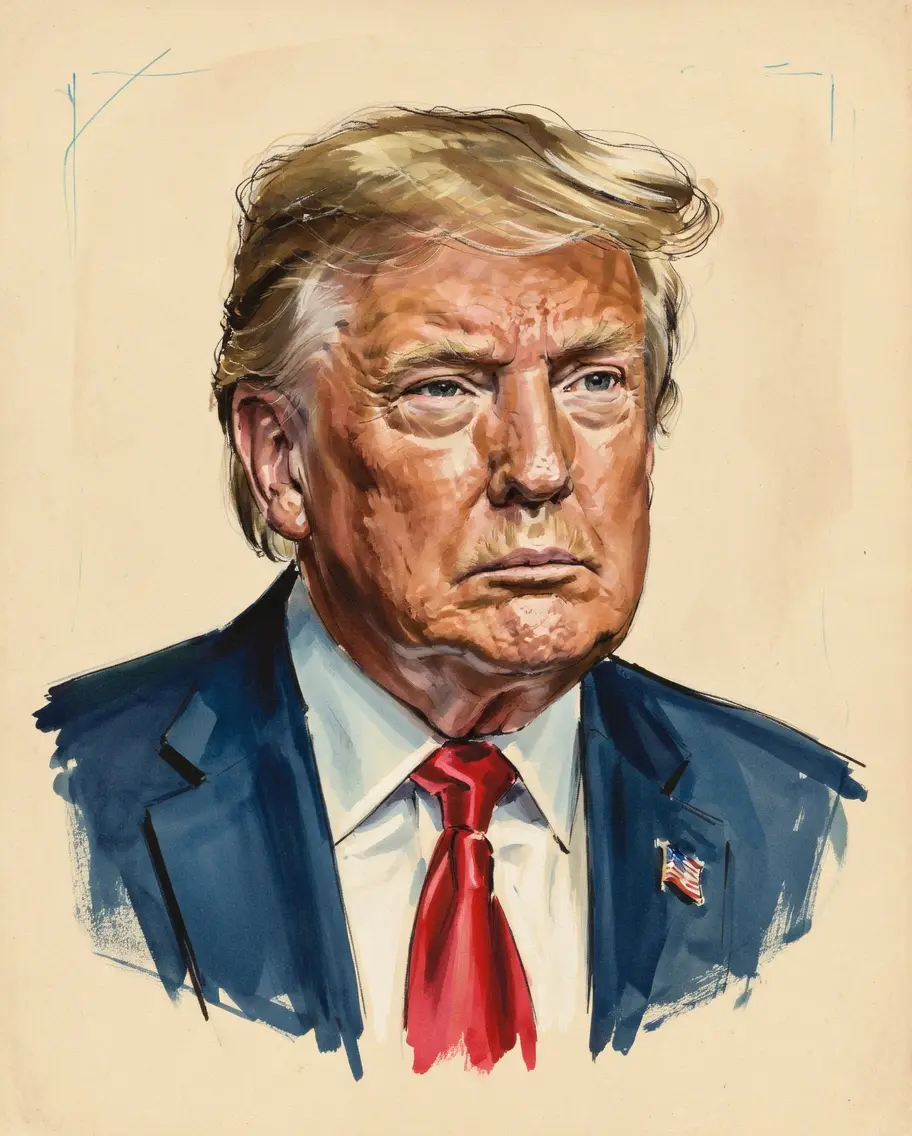
Donald Trump on China
TL;DR
Donald Trump views China as a primary strategic competitor that must be actively countered through economic pressure and geopolitical competition.
Key Points
The U.S. imposed travel bans on Chilean officials in March 2026 over possible fiber optic cable construction with China.
He pressed the Panamanian government to seize ports operated by a Hong Kong company near the Panama Canal.
He has publicly insisted that there are no wind farms in China, despite photographic evidence to the contrary published in March 2026.
Summary
Donald Trump maintains a highly confrontational stance toward China, framing the relationship as one of intense competition that necessitates strong countermeasures, particularly regarding trade and geopolitical influence. His administration previously initiated trade disputes and is currently pressing allies and regional partners, such as those in Latin America, to reduce their economic and strategic dependence on Beijing. This approach is underscored by warnings against Chinese control over strategically vital assets, such as deep-water ports, which raise U.S. security concerns regarding potential military use in the Western Hemisphere.
This adversarial posture exists within a broader context where the President’s disruptive foreign policy creates global instability, which some analysts suggest China benefits from by presenting itself as a stable, ascendant superpower focused on technological self-reliance. While in the past he has focused heavily on trade deficits and tariffs, his current actions show a comprehensive effort to push back against China's growing global footprint. Furthermore, his claims regarding China's domestic infrastructure, such as insisting there are no wind farms, contrast sharply with visible evidence of China's ongoing development in key sectors.
Frequently Asked Questions
Donald Trump currently maintains a strong, negative stance, viewing China as a major strategic rival that requires aggressive countering. His focus includes curbing Chinese economic dominance in regions like Latin America through U.S. pressure and tariffs.
Yes, while his previous tenure was defined by a trade war and tariffs, his current approach seems to expand beyond just trade deficits. He continues to signal a willingness to use punitive economic measures, such as cutting trade with allies over foreign policy stances, signaling a sustained hawkish trade posture.
The former president has made specific, easily refuted claims about China, such as insisting there are no wind farms there. This stands in contrast to China's evident growth in high-tech and infrastructure, which he seeks to limit through U.S. action.
Sources5
Trump takes forceful steps to pressure Latin American leaders to reduce China ties
As Trump unleashes chaos, China has a message it wants the world to hear
Donald Trump insists there are no wind farms in China. Here are 20 of them – in pictures
Trump Iran war China trade tariffs
Trump slams European allies, praises China and continues to justify Iran attack | South China Morning Post
* This is not an exhaustive list of sources.