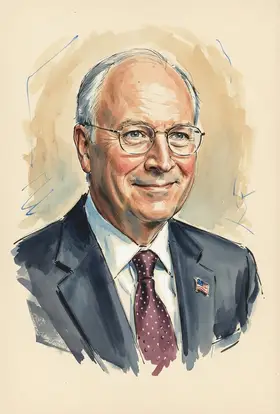
Dick Cheney on War Crimes
TL;DR
Dick Cheney consistently defended post-9/11 policies, including interrogation methods, despite accusations they constituted war crimes.
Key Points
He defended the use of “enhanced interrogation techniques,” stating that authorizing waterboarding was “a no-brainer” in 2006.
His administration successfully pushed a legal interpretation denying Geneva Convention protections to detainees from al Qaeda or the Taliban.
He maintained a no-regrets position on the Iraq War until his death, asserting in 2013 that he “would do it again in a minute.”
Summary
Richard Bruce Cheney, as Vice President, was the architect of many policies enacted under the umbrella of the “war on terror” following the September 11, 2001, attacks. Critics, including advocacy groups and former officials, have specifically labeled his actions and the policies he championed as war crimes. He actively sought to use the justification of fighting terrorism to bypass established legal restraints concerning the treatment of detainees, advocating for and defending the use of “enhanced interrogation techniques,” such as waterboarding, which are widely considered torture under international and U.S. law. He argued that those believed to be involved in terrorist attacks did not deserve the same safeguards as American citizens, such as the protections of the Geneva Conventions, which his administration worked to deny to certain detainees.
Cheney maintained a consistent, no-regrets stance on these contentious policies up until his death, asserting that the decisions, including those concerning detainee treatment and military commissions, were necessary and legally sound for protecting the nation. He specifically doubled down on his legacy of supporting torture in his memoir. His position was rooted in an ideological commitment to an expansive view of executive power, which he felt needed to be vigorously defended against congressional oversight. This stance allowed him and the administration to push forward with policies that detractors claim led to violations of international humanitarian law and domestic statutes, for which he enjoyed impunity.
Frequently Asked Questions
Dick Cheney did not publicly accept the label of 'war criminal,' instead consistently defending the policies he championed during the War on Terror. He argued that actions taken, such as utilizing 'enhanced interrogation techniques,' were necessary and legally grounded exercises of presidential power to protect the nation. According to critics, his firm defense of these measures confirms his position as a central figure responsible for actions deemed to violate international law.
No, Dick Cheney maintained a no-regrets stance regarding the policies that drew war crimes accusations. He stated in 2005 that he stood by his justification for the Iraq invasion and later claimed in 2013 that he would use enhanced interrogation techniques, like waterboarding, again. These statements, made years after the policies were implemented, show a lack of contrition for the resulting controversy.
Cheney's legal justification centered on the President's constitutional authority as Commander-in-Chief, particularly in the context of the global war on terror. He argued that non-citizens engaged in terrorist attacks did not deserve the same legal guarantees as American citizens, including Geneva Convention protections. This expansive view of executive power was used to support actions that others deemed to be war crimes or torture.
Sources6
War Criminal Dick Cheney Dead at 84, With Blood of Millions on His Hands | Truthout
Dick Cheney's Ten Year War on Truth - Amnesty International
Cheney, Vice Presidential Power and the War on Terror
Cheney 'may be guilty of war crime' | World news | The Guardian
War Criminal of the Week: Dick Cheney - CODEPINK - Women for Peace
Dick Cheney - Wikipedia
* This is not an exhaustive list of sources.