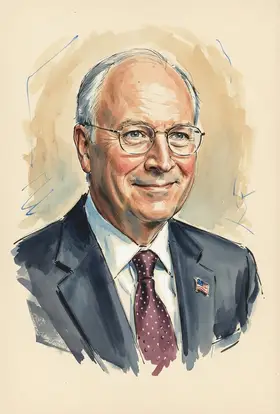
Dick Cheney on Vice Presidency Policies
TL;DR
Dick Cheney aggressively redefined the vice presidency as the most powerful office through expanded executive authority and policy control.
Key Points
He was instrumental in pushing for and defending controversial post-9/11 policies, including enhanced interrogation techniques and a secret warrantless domestic surveillance program.
Cheney led efforts to establish a system of Military Commissions that operated outside the normal judicial process for trying non-citizens suspected of terrorism.
His office was involved in shaping the administration's position that the Geneva Convention did not apply to al-Qaeda or Taliban detainees.
Summary
Richard Bruce Cheney fundamentally reshaped the role of the Vice President of the United States, moving it from a largely ceremonial position to one of unprecedented influence and power within the executive branch. This expansion was rooted in a long-standing ideological commitment to strengthening executive authority, which predated his tenure, and was heavily influenced by the events of September 11, 2001. He utilized his close relationship with the President, his vast prior government experience, and a leadership style that delegated significant operational authority to occupy a role some referred to as the "Imperial Vice Presidency."
The implication of his tenure was a model of vice-presidential conduct that operated with minimal conventional accountability, as he often bypassed established policy-making processes and resisted external scrutiny regarding key decisions, such as those concerning national security and intelligence. His actions established a precedent for a robust, policy-driving second-in-command, contrasting sharply with historical norms of vice-presidential self-restraint.
Frequently Asked Questions
Dick Cheney viewed the traditional, often ceremonial role of the Vice President as too feeble and sought to transform it into a highly powerful office. He was not interested in a sinecure and accepted the nomination with the understanding that the job would be much more than ceremonial.
Cheney used his influential position to advance his long-held conviction for a stronger executive branch, particularly in foreign and national security policy. This desire to restore presidential power influenced key administration actions before and after the September 11, 2001 attacks.
While Cheney possessed immense power due to the President's delegation and trust, some analyses suggest he operated with significant autonomy, particularly in the first term. His influence stemmed from his deep pre-existing relationship with the President and his role in setting the agenda.
Sources5
How Dick Cheney made vice-presidency dangerous
A look at Dick Cheney's influential and polarizing legacy | PBS NewsHour
Dick Cheney Made the Most of the Vice Presidency
Cheney, Vice Presidential Power and the War on Terror
5 Ways Dick Cheney Influenced History
* This is not an exhaustive list of sources.