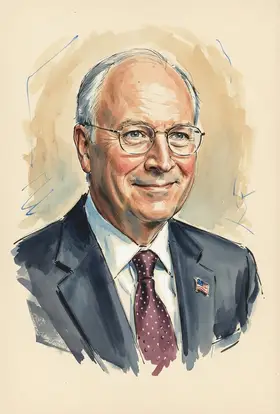
Dick Cheney on Controversies
TL;DR
Dick Cheney's political career is indelibly linked to several high-profile controversies that defined his tenure as Vice President.
Key Points
His tenure as Vice President saw him deeply involved in the administration's controversial detention and interrogation policies post-2001.
He was frequently cited by analysts as the primary architect behind the decision to invade Iraq, a conflict that generated massive global controversy.
His approach to executive power was scrutinized, with critics alleging he operated with unprecedented influence beyond the traditional vice-presidential role.
Summary
Dick Cheney's political career was characterized by his involvement in or architecting of several significant national and international controversies that sparked intense public debate. He was widely considered the architect of the Iraq War, a defining controversy of his term, which faced immense scrutiny regarding its premises and execution. Furthermore, his use of executive power and his administration's surveillance and interrogation policies generated continuous controversy, with critics often pointing to the scope of power he wielded from behind the scenes of the presidency.
These controversies have left a lasting imprint on his legacy, with many analyses of his time in office centering on these contentious issues. The implications of his actions and policy stances during the post-9/11 era continue to be debated in political and historical circles. His unwavering defense of the administration's actions, even when facing intense backlash, solidified his reputation as an unyielding figure in American politics.
Key Quotes
We're there because if Saddam Hussein, who is, I would argue, a far more frightful creature than most rulers you will find any place in the world today, were to take control of the world's supply of energy with his enormous military capability, with the prospect he would acquire nuclear weapons, that he would have a strangle to hold on the economy of the United States and the rest of the world.
Frequently Asked Questions
Dick Cheney consistently defended the administration's decision to pursue the Iraq War, maintaining that the intelligence assessments at the time justified the action. He has generally argued that the controversy stems from a misrepresentation of the threat and the subsequent outcomes. According to historical analyses, he maintained this position even when facing significant public and political pushback.
Dick Cheney generally defended the expansive use of executive power utilized by his administration, particularly in matters of national security. He expressed the view that the Vice President's role required decisive action, especially following the September 11 attacks, as stated in various interviews. His defenders often point to the necessity of strong leadership during a time of crisis.
While Dick Cheney strongly defended the core actions of the administration he served, he has sometimes addressed specific criticisms by reframing the narrative around them. For instance, he often discussed the challenges of intelligence gathering, which underpinned some controversies, as detailed in reports from think tanks. He has historically shown little inclination to apologize for his role in high-stakes decision-making.
Sources9
A look at Dick Cheney's influential and polarizing legacy
Dick Cheney dead: Five of his biggest controversies
Dick Cheney: Always Unintimidated
Dick Cheney's Power, Controversies, and Legacy
Dick Cheney wielded his power in the shadows: The excerpt
Remembering Dick Cheney
Dick Cheney: Our Modern Ajax
The Unauthorized Biography of Dck Cheney (2004)
Dick Cheney, one of the most powerful vice presidents in American history, dies at 84
* This is not an exhaustive list of sources.