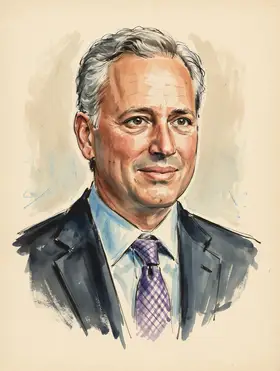
David Sacks on China
TL;DR
David Sacks views China as the primary competitor to the US in the critical race for artificial intelligence dominance.
Key Points
He fears American pessimism and regulatory concerns may cause the US to lose the global AI race to China.
He noted in late 2025 that China was proactively working around US export control strategies by rejecting certain advanced semiconductors.
As the White House AI and crypto czar, his role involves navigating the regulatory landscape to ensure US competitiveness against China's technological push.
Summary
David Sacks has positioned China as the central geopolitical and technological rival, particularly in the rapidly evolving field of artificial intelligence. He argues that American pessimism and excessive regulation risk allowing China to win the global AI race, which he frames as a contest with significant national security and economic implications. Sacks frequently emphasizes the need for the United States to adopt a more aggressive, pro-innovation stance to counter China's state-directed technological ascent. He has warned that if the US succumbs to regulatory overreach, the strategic advantage will shift decisively to Beijing.
This focus on technological competition defines his current public commentary regarding the nation. His perspective is often tied to the need for domestic policy shifts in the US, suggesting that internal inertia is a greater threat than China's direct capabilities alone. For instance, he has discussed how China is already working to circumvent export controls, noting how the country is rejecting certain advanced components in favor of domestic alternatives. Therefore, his stance centers on viewing China through the lens of strategic rivalry, demanding a proactive and decisive American response to maintain technological supremacy.
Frequently Asked Questions
David Sacks's primary concern regarding China centers on the nation's aggressive push for dominance in artificial intelligence technology. He strongly believes that if the United States does not rapidly adopt a more ambitious and less regulated approach, it will lose the AI race to Beijing. His position views this technological competition as a defining geopolitical contest for the coming decades.
David Sacks views China as the key driver for necessary policy shifts within the US government concerning AI development. He argues that the threat of falling behind China necessitates a pivot away from what he perceives as overly cautious or pessimistic regulatory attitudes. For him, China serves as the benchmark against which American innovation strategy must be measured and accelerated.
David Sacks's recent public statements have strongly framed China as the primary strategic rival in the context of AI and technology leadership. While his prior investment focus was broader, his current commentary centers almost exclusively on countering China's technological advancement. He appears to advocate for a consistently hawkish, pro-innovation posture to address this specific rivalry.
Sources8
David Sacks on what he fears may make America lose AI race to China
David Sacks | Council on Foreign Relations
David Sacks Warns America Could Lose the AI Race Because of Pessimism
Tweet by Renaud Bertrand regarding David Sacks's view on China's chip strategy
David Sacks: AI, Crypto, China, Dems, and SF
White House AI czar David Sacks says regulations could tip AI advantage to China
Sacks Lays Out How US Can Win AI Race, Warns of Repercussions
China Is Rejecting H200s, Outfoxing US Strategy, Sacks Says
* This is not an exhaustive list of sources.