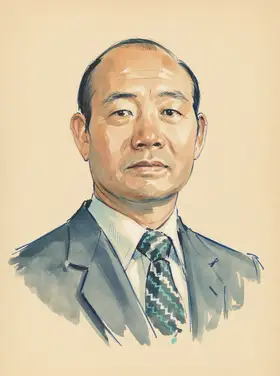
Chun Doo Hwan on Administration
TL;DR
Chun Doo Hwan's administration centered on consolidating military power through a highly centralized, authoritarian structure following his 1979 coup.
Key Points
The administration began following a military coup in December 1979, establishing a military-backed government.
He met with the US president in 1981 to discuss bilateral relations and regional security matters.
The Gwangju Uprising in May 1980 was suppressed by military forces under his command, solidifying political control.
Summary
Chun Doo Hwan's position on administration was defined by his seizure of power in December 1979, leading to a highly centralized, military-backed governance structure during the Fifth Republic of South Korea. His initial actions prioritized establishing firm control, exemplified by the military suppression of the Gwangju Uprising in May 1980, which served as a brutal demonstration of the regime's commitment to maintaining order through force rather than popular consensus. This foundation dictated an administrative style focused on internal security, economic development through state guidance, and firm opposition to political dissent, effectively sidelining democratic institutions and political opposition in favor of an executive-dominant system.
This approach to administration persisted throughout his presidency, often characterized by a facade of civilian rule masking underlying military authority. While the administration oversaw significant economic growth, the underlying political environment remained restrictive, with civil liberties heavily curtailed to ensure stability and implementation of the government’s directives. The legacy of his administration's administrative style is marked by the tension between state-led economic success and the profound lack of political freedom, directly shaping the subsequent democratization movements in the nation.
Key Quotes
We pledge our continued effort to further consolidate the partnership between our two countries.
Frequently Asked Questions
Chun Doo Hwan's administrative style was highly centralized and authoritarian, stemming from his military background and the consolidation of power after his 1979 coup. His governance emphasized order and state control over democratic processes during his tenure as president.
There is no significant public record indicating a major evolution in Chun Doo Hwan's core administrative philosophy from his time in power. His later life focused more on legal battles and personal reflections following his removal from office.
Key events characterizing his administration include the violent suppression of the Gwangju Uprising in May 1980 and the subsequent establishment of the authoritarian Fifth Republic. He maintained close security ties with the United States throughout this period.
Sources5
Chun Doo-hwan
NSAEBB-306: Documents on the Korean Peninsula, 1980-1983
Chun Doo-hwan’s Bloody Gwangju Legacy Is America’s Problem Too
Remarks Following Discussions With President Chun Doo Hwan of the Republic of Korea
Joint Statement Following Meetings With President Chun Doo Hwan of the Republic of Korea
* This is not an exhaustive list of sources.