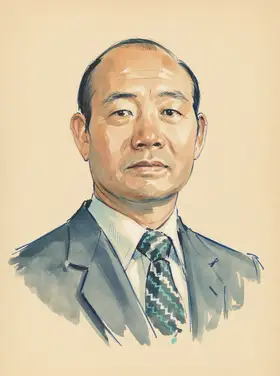
Chun Doo Hwan on North Korea
TL;DR
Chun Doo Hwan viewed North Korea as the primary national security threat, consistently advocating for a strong defense posture against Communist aggression.
Key Points
He was the direct target of a North Korean assassination attempt in Rangoon, Burma, on October 9, 1983, which killed 21 of his entourage.
In 1980, he issued a memorandum stating South Korea would not develop missiles with a range over 180 km, a condition the US required for recognition.
Following the 1983 bombing, he and the US President called for effective international sanctions against North Korea for its act of state terrorism.
Summary
Chun Doo Hwan's position regarding North Korea was defined by unwavering hostility and a focus on national security, viewing the North as the existential Communist threat to the Republic of Korea. This stance was dramatically solidified following the October 9, 1983, Rangoon bombing, an assassination attempt orchestrated by North Korean agents which killed 21 people, including several senior South Korean cabinet ministers, while Chun himself narrowly escaped. This act of state terrorism reinforced his administration's hardline, anti-Communist foreign policy, which was centered on maintaining a strong military deterrence backed by the United States. His government publicly characterized North Korea's actions as barbaric and called for international sanctions against the regime.
During his presidency, Chun utilized the perceived and actual danger from the North to justify his domestic security measures and secure strong security guarantees from allies like the United States. He famously rejected North Korea's proposals for dialogue and confederation, preferring to deal with the known leadership rather than the successor, while simultaneously asking the US to refrain from any unilateral talks with Pyongyang. His administration also committed to not developing long-range missiles, conditional on US recognition, demonstrating a strategic calculus aimed at maintaining stability against the North Korean threat while navigating Cold War alliances.
Key Quotes
I'm going to make all of these decisions. Nobody is to do anything. And in particular, you guys are going to stand down until I tell you what to do. I'm going to take my time and get some sleep. I'm going to talk to some people.
The two Presidents shared the view that any unilateral steps toward North Korea which are not reciprocated toward South Korea by North Korea's principal allies would not be conducive to promoting stability or peace in the area.
Frequently Asked Questions
Chun Doo Hwan viewed North Korea as the primary, unyielding national security threat to South Korea. His administration's policy was firmly rooted in staunch anti-Communism and maintaining a strong military defense posture to deter aggression from the North.
The 1983 Rangoon bombing, a direct assassination attempt by North Korean agents, served to unequivocally validate and harden Chun Doo Hwan's hardline position. The attack, which killed many of his top officials, reinforced his belief that North Korea was inherently brutal and that only strong resolve and alliances could ensure South Korea's survival.
The leader expressed a willingness for high-level dialogue, even proposing a summit, but he was generally skeptical of North Korea's peace offensives, viewing them as political maneuvers to undermine stability. He preferred to deal with the established leadership rather than engage in unilateral concessions.
Sources8
Rangoon bombing - Wikipedia
Mission Unspeakable: When North Koreans Tried to Kill the President of South Korea – Association for Diplomatic Studies & Training
NORTH KOREA: COMING TO GRIPS WITH CHUN DOO HWAN - CIA
Seeing human rights in the "proper manner": The Reagan-Chun Summit of February 1981
In 1983, North Korea Tried to Blow up South Korea's President - The National Interest
Joint Statement Following Meetings With President Chun Doo Hwan of the Republic of Korea | The American Presidency Project
Is North Korea Changing Course? - Project MUSE
* This is not an exhaustive list of sources.