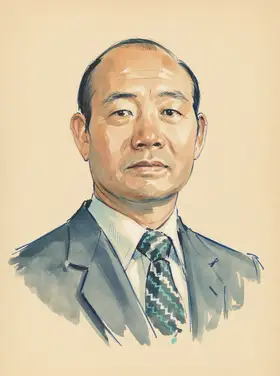
Chun Doo Hwan on Gwangju Uprising
TL;DR
Chun Doo Hwan consistently framed the Gwangju Uprising as an instigated riot that the military suppressed appropriately.
Key Points
He expanded martial law nationwide on May 17, 1980, paving the way for the military suppression that began the next day.
In 1996, the former president was convicted of leading an insurrection related to the Gwangju Uprising suppression but received a pardon in December 1997.
In his 2017 memoir, Chun denied that the military intentionally or indiscriminately killed civilians in Gwangju, a claim later deemed false by the Supreme Court.
Summary
Chun Doo Hwan, who took power via a coup in 1979 and seized full military control in May 1980, ordered the violent suppression of the Gwangju Democratization Movement. His core position during and immediately after the events was that the uprising was a communist-instigated riot that required a firm military response to maintain national stability. Following the crackdown, the government under his control labeled the event a "riot" and falsely claimed it was incited by North Korean sympathizers. This position was legally cemented when he was convicted in 1996 for leading an insurrection relating to the unlawful declaration of martial law to subdue the uprising, although he was later pardoned.
After stepping down, the former dictator continued to deny responsibility for indiscriminate killing, including alleged helicopter attacks on civilians, most notably in his published memoirs. Although he apologized for his brutal rule generally in a 1988 address and his family later offered apologies after his death, he never offered a sincere, specific apology for the massacre itself, and his memoir writings led to posthumous court rulings confirming his liability for distorting the facts of the uprising.
Key Quotes
...There was no intentional or indiscriminate killing of civilians by the military in Gwangju.”
...dismissed it as a lie.
Frequently Asked Questions
Chun Doo Hwan officially justified the military action by claiming the protests in Gwangju were an insurrection instigated by North Korean communist sympathizers. He used the expansion of martial law on May 17, 1980, as the legal basis for dispatching troops armed with heavy weaponry to quell the movement.
Chun Doo Hwan made a public address in 1988 where he apologized to the nation and pledged to return wealth, but he never offered a specific apology for the Gwangju massacre itself. His later memoir writings actively disputed key aspects of the event, leading to posthumous court rulings that confirmed his liability for distortions.
Chun Doo Hwan was convicted in 1996 of insurrection and other charges related to unlawfully declaring martial law and suppressing the Gwangju Uprising, receiving a death sentence that was commuted to life imprisonment. He was ultimately pardoned by the sitting president in December 1997 for the sake of national reconciliation.
Sources7
Gwangju Uprising - Wikipedia
The Gwangju Uprising: A Battle over South Korea's History | Wilson Center
Chun Doo Hwan Archives - Korean Quarterly
Supreme Court Confirms Liability for Chun Doo-hwan's Gwangju Uprising Distortions
Gwangju Isn't Over | Origins: Current Events in Historical Perspective
Revisiting the Five Principles for Solving the Gwangju Problem: Focusing on Forgiveness and Reconciliation
* This is not an exhaustive list of sources.