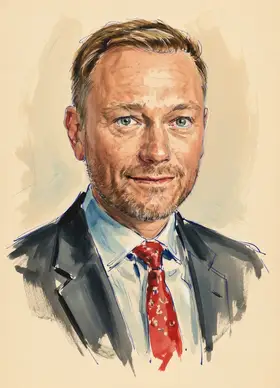
Christian Lindner on Olaf Scholz
TL;DR
Christian Lindner, as Finance Minister, consistently challenged Chancellor Olaf Scholz's government priorities, notably regarding fiscal policy and spending.
Key Points
As Finance Minister, he consistently advocated for adherence to the constitutional debt brake, often contrasting with the spending priorities of the Chancellor's party.
His dismissal by the Chancellor in November 2024 officially ended the ruling three-party coalition government.
Lindner expressed more open views on cryptocurrency adoption, such as Bitcoin, than the general stance of the Scholz administration.
Summary
Christian Lindner's position on Olaf Scholz was characterized by significant tension arising from their roles as the head of the Free Democratic Party and the Chancellor, respectively, within the ruling 'traffic light' coalition. Lindner, representing the fiscally conservative FDP, frequently voiced opposition to spending plans favored by Scholz's Social Democrats and the Greens, asserting a commitment to the constitutional debt brake and lower taxes. This friction was evident in disputes over the national budget, where Lindner actively sought to curb government expenditures and resist tax increases, positioning himself as the principal guardian of economic orthodoxy against the coalition's more progressive wings.
The evolution of his stance culminated in the effective collapse of the coalition, preceding the Chancellor's decision to dismiss him, which marked the ultimate breakdown of their governing partnership. Even beyond budgetary matters, ideological differences appeared in areas like the adoption of digital currencies, where Lindner expressed more progressive views on Bitcoin than the government under Scholz officially endorsed. Ultimately, Lindner acted as a consistent check on Scholz's executive agenda, leading to an increasingly fraught working relationship that defined much of the government's term.
Frequently Asked Questions
Christian Lindner's position on Olaf Scholz was one of political friction due to their leadership of different coalition parties. As Finance Minister, Lindner frequently acted as a fiscal counterweight to the Chancellor's cabinet.
The relationship was defined by consistent tension over policy, suggesting a steady, strong opposition to Scholz's fiscal direction from the FDP leader. This culminated in the collapse of their governing arrangement.
Christian Lindner criticized the government under Olaf Scholz, primarily on matters of spending and adherence to budgetary rules like the debt brake. His criticism ultimately contributed to the coalition's breakdown.
Sources5
Former German Finance Minister Lindner Criticizes Scholz on Bitcoin Adoption, US...
Germany's finance minister fired by Chancellor Scholz as ruling three-party coalition collapses
Germany coalition government collapse: Olaf Scholz fires finance minister Christian Lindner
German Chancellor Scholz runs out of patience with coalition
German Chancellor Olaf Scholz fires finance minister Christian Lindner
* This is not an exhaustive list of sources.