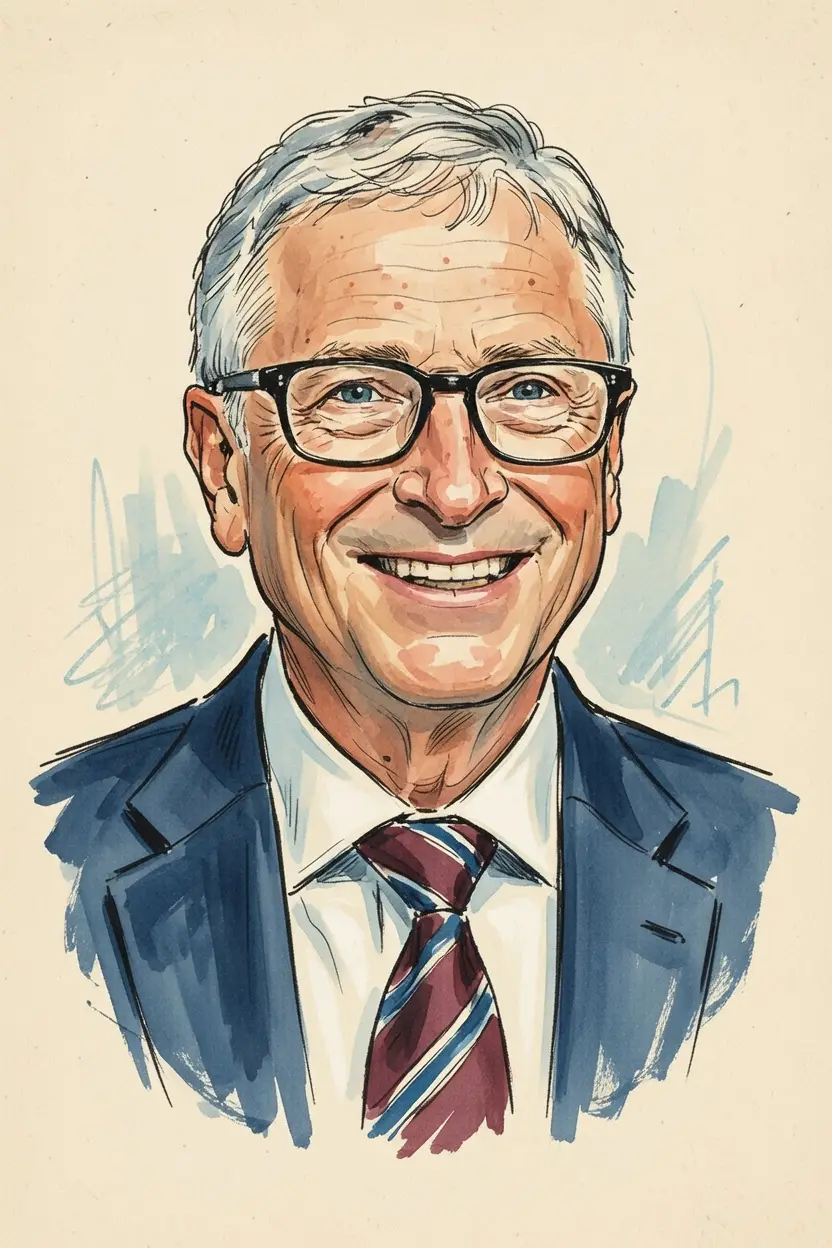
Bill Gates on Universal Basic Income
TL;DR
Bill Gates believes countries are not yet financially prepared for a stable Universal Basic Income program today.
Key Points
He stated in February 2017 that even the U.S. was not rich enough to implement a UBI that allows people not to work.
He suggested that future revenue from taxing robots that take jobs could help finance sectors needing people, potentially linking to future UBI funding.
In the near term, he favored investing in government programs like the Earned Income Tax Credit to increase the demand for labor.
Summary
Bill Gates expressed a cautious stance on Universal Basic Income, stating in 2017 that while the concept could be beneficial over time, current global economic conditions mean countries are not yet wealthy enough to finance a stable UBI program for all citizens. He noted that even the United States currently lacks the financial resources to implement a system that would allow people to stop working entirely. He suggested that in the interim, efforts should focus on targeted support for specific groups, like the elderly and children with special needs, alongside initiatives to increase the demand for labor.
He connects the need for alternative economic solutions to the rise of automation, having previously proposed taxing robots that displace human workers to generate revenue. The funds from such a tax, he suggested, could finance crucial sectors like education and job retraining programs. Gates implies that as technology progresses and countries become richer, UBI may become a viable option, but for now, strengthening existing programs like the Earned Income Tax Credit is a more appropriate path forward than a universal handout.
Key Quotes
“The world isn't ready for universal basic income”
Frequently Asked Questions
Bill Gates has expressed skepticism about the immediate feasibility of Universal Basic Income, noting that countries are currently not wealthy enough to fund it stably. He believes that while UBI might be possible in the future, current focus should be on targeted support and increasing labor demand. He does not outright oppose the concept but sees it as a long-term possibility rather than an immediate necessity.
He argues that the main constraint is financial, asserting that nations, including the U.S., lack the necessary wealth to provide a sustainable, unconditional income to everyone. He suggests that current resources should instead be directed toward helping vulnerable populations and bolstering education. The co-chair feels the economic transition necessitated by automation is not yet at the point where UBI is the appropriate or affordable solution.
Instead of a universal basic income, Bill Gates previously proposed taxing robots that replace human jobs, suggesting the revenue could fund sectors needing human workers. He also supports strengthening programs like the Earned Income Tax Credit to boost labor-market participation in the interim. His immediate priorities involve targeted aid for seniors and children with special needs.
Sources6
Why we're not ready for basic income - according to Bill Gates
Bill Gates Addresses UBI on Reddit AMA
Bill Gates: The World Isn't Ready for Universal Basic Income : r/Futurology
Bill Gates Wants To 'Tax The Robots' That Take Your Job – And Some Say It Could Fund Universal Basic Income To Replace Lost Wages... Is this a good idea?
A Future Without Work? What Elon Musk and Bill Gates Are Saying
Bill Gates on AI, healthcare, and the Universal Basic Income
* This is not an exhaustive list of sources.