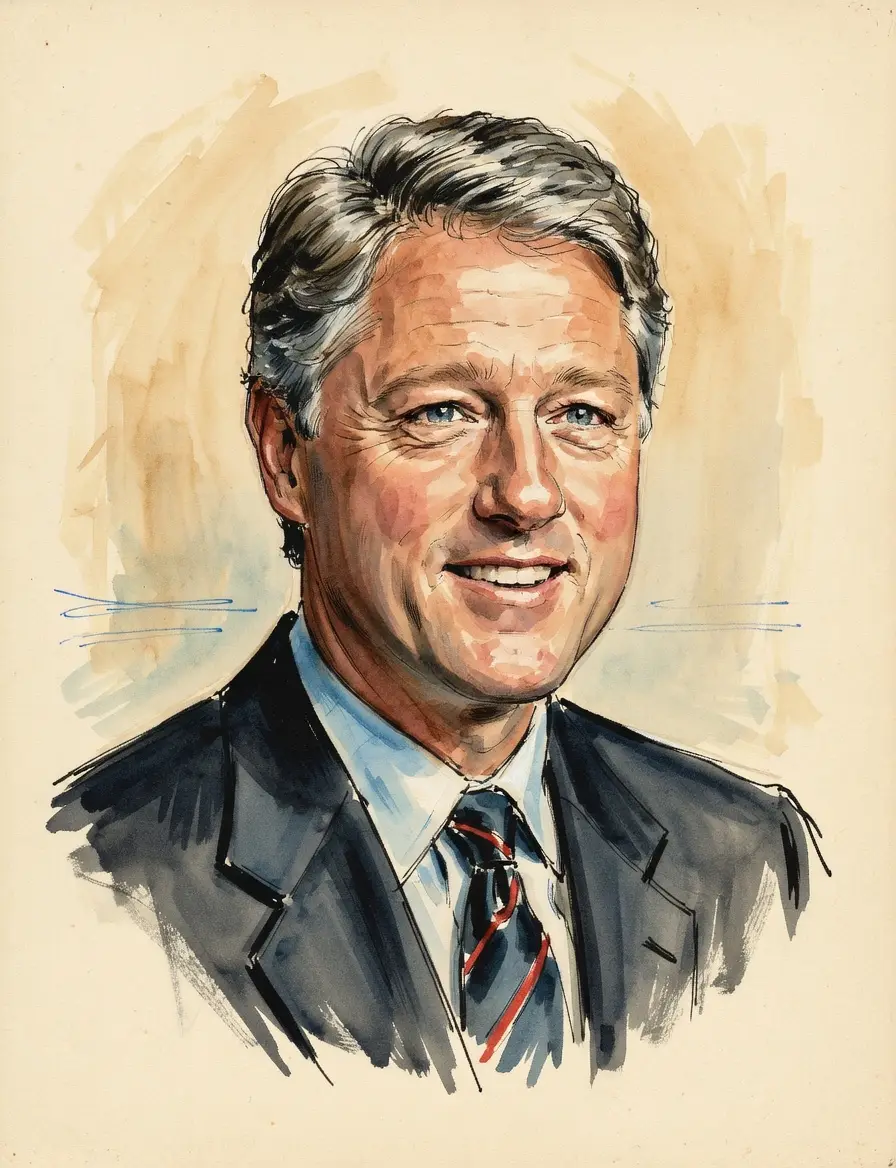
Bill Clinton on Russia
TL;DR
Bill Clinton initially fostered a strong partnership with Boris Yeltsin to support Russian democracy and secure nuclear materials throughout the 1990s.
Key Points
He personally supported Russian President Boris Yeltsin through domestic political crises following the 1993 referendum.
The administration worked to secure and dismantle former Soviet nuclear weapons through the Nunn-Lugar Cooperative Threat Reduction program.
The former president later stated that he learned from a 2011 conversation that President Putin did not consider himself bound by the Budapest Memorandum guaranteeing Ukraine's borders.
Summary
During his presidency, Bill Clinton was deeply engaged with Russia, characterized by a personal and supportive relationship with President Boris Yeltsin that began immediately after his inauguration in 1993. The core of the administration's early approach was to treat Yeltsin as an equal and bolster his commitment to Russian democracy and economic liberalization, often referred to as “shock therapy.” Key evidence of this was Clinton's assurance to Yeltsin following his April 1993 referendum victory, stating, “we're in this with you for the long haul,” which was backed by securing financial assistance from the U.S. Congress and G-7 partners. This cooperation extended to critical security areas, including efforts to secure the Soviet nuclear arsenal and secure adherence to arms control treaties like START I by post-Soviet states.
This initial optimistic engagement evolved as the decade progressed and Yeltsin faced domestic opposition and later, as his successor came to power. While the administration pushed for Russia’s inclusion in international forums, such as the G-8 in 1997, tensions arose over issues like NATO expansion and Russia’s military actions in Chechnya. More recently, the former president has expressed regret over subsequent Russian actions, recalling a 2011 conversation where President Putin indicated he was not bound by the Budapest Memorandum guaranteeing Ukraine’s borders, suggesting he foresaw future conflict.
Frequently Asked Questions
Bill Clinton's approach centered on establishing a strong, cooperative partnership with Russian President Boris Yeltsin, viewing him as essential for guiding Russia toward democracy and market reforms. This involved significant personal engagement and financial support aimed at stabilizing the Russian economy and securing its nuclear arsenal. He intended this relationship to integrate Russia into the broader community of market democracies.
While initially supportive, the former president expressed later concerns regarding Russian authoritarianism after leaving office, specifically recalling a 2011 discussion. In that meeting, President Putin allegedly told Clinton he did not support the Budapest Memorandum, which guaranteed Ukraine's territorial integrity if it surrendered its nuclear weapons. Clinton stated that this conversation made him certain that a Russian attack on Ukraine was only a matter of time.
A major achievement of the Clinton administration was cooperation on arms control and nuclear security with Russia. They worked to ensure that Ukraine, Belarus, and Kazakhstan transferred Soviet-era nuclear weapons to Russia and adhered to treaties like START I. This involved providing financial and technical assistance under the Nunn-Lugar program to dismantle the weapons safely.
Sources7
'We're In This With You': Declassified Clinton Memos Show A Path For Russian Relations That Wasn't To Be
The First Six Months of Clinton-Russian Relations: Summits with Yeltsin at Vancouver and Tokyo, 1993
Bill Clinton, Boris Yeltsin, and U.S.-Russian Relations
Former President Bill Clinton on authoritarianism: 'They can't win in the long run'
We knew in 2011 Putin would attack Ukraine, says Bill Clinton
Prime Minister Vladimir Putin meets with former President of the United States Bill Clinton
Bill Clinton: Foreign Affairs | Miller Center
* This is not an exhaustive list of sources.