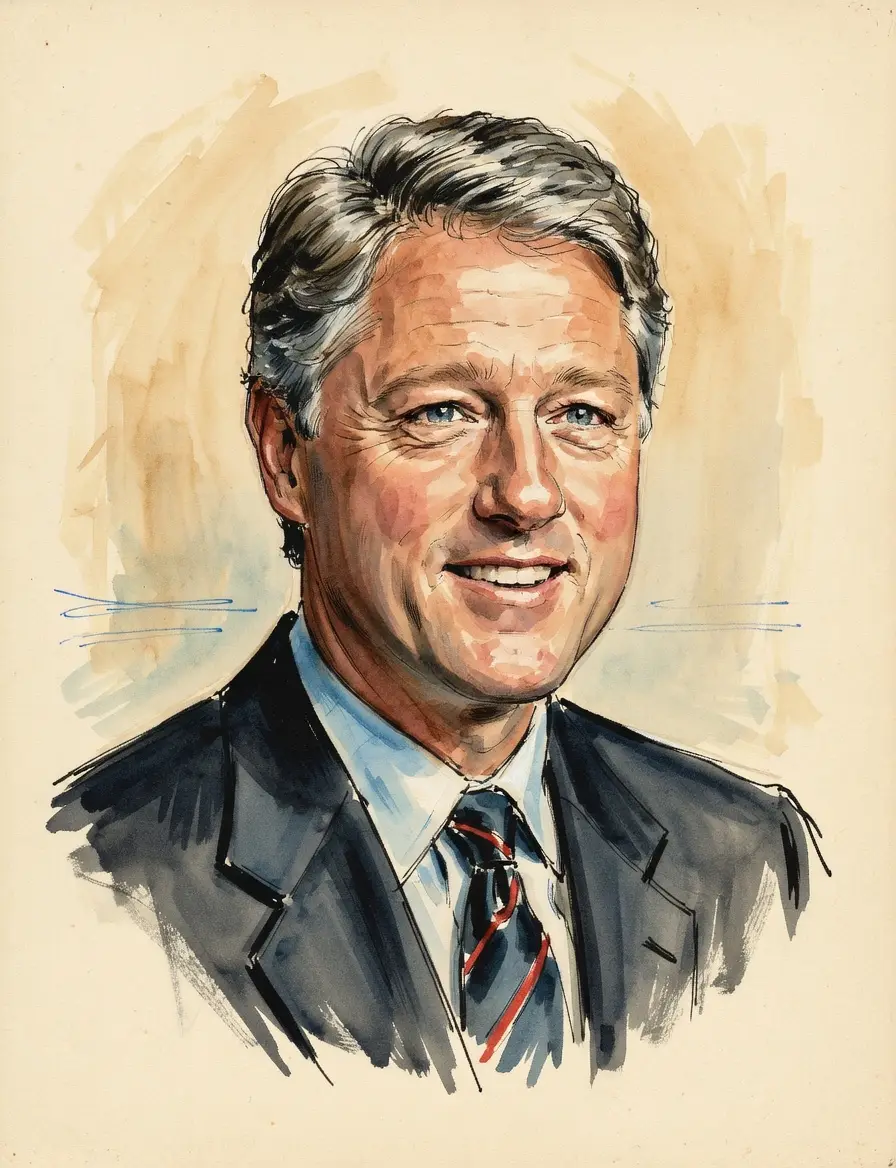
Bill Clinton on Crime Policy
TL;DR
Bill Clinton championed the 1994 Crime Bill, funding more police and prisons while later expressing regret over mass incarceration.
Key Points
He signed the Violent Crime Control and Law Enforcement Act in 1994, which was authored in part by then-Senator Joe Biden.
The 1994 Crime Bill authorized $30.2 billion for measures including hiring 100,000 new police officers and $9.7 billion for prison construction.
Clinton presided over the execution of Ricky Ray Rector in 1992 to project a tough-on-crime image during his presidential campaign.
Summary
Bill Clinton's position on crime policy was largely defined by his championing and signing of the Violent Crime Control and Law Enforcement Act of 1994. This legislation, which he often framed as both tough and smart, authorized significant federal spending for hiring 100,000 more police officers, building prisons, and mandating life sentences for three-time violent felony offenders. The Act also expanded the federal death penalty to sixty new crimes and included provisions like the Violence Against Women Act. Proponents argued it led to a historic drop in crime rates, which benefited urban communities most directly impacted by violence.
However, the legacy of the 1994 Crime Bill is complex, as critics argue it fueled mass incarceration and disproportionately harmed minority communities, particularly African American men. While Clinton sought to distance the Democratic Party from being perceived as soft on crime by outflanking Republicans, he ultimately approved punitive measures despite awareness of existing racial disparities within the criminal justice system, such as those in drug sentencing. Years later, Clinton acknowledged that the good news of falling crime was linked to the bad news of many minor actors being "locked up... for way too long."
Key Quotes
“I can be nicked a lot, but no one can say that I'm soft on crime,”
Frequently Asked Questions
Bill Clinton's signature achievement in crime policy was signing the Violent Crime Control and Law Enforcement Act of 1994. This expansive legislation provided funding for hiring more police officers, building new prisons, and implementing 'three strikes' sentencing.
The former president later acknowledged the negative side effects of the 1994 Crime Bill, noting that while crime fell to a 25-year low, too many people were locked up for minor offenses for too long. He has since expressed regret regarding its contribution to mass incarceration.
The 1994 Crime Bill included provisions for mandatory life sentences for third violent felony convictions, the deployment of 100,000 new police officers, and making sixty new federal crimes eligible for the death penalty.
Sources4
The President's Radio Address April 09, 1994
Unlocking the Truth About the Clinton Crime Bill
The Clintons' War on Drugs: When Black Lives Didn't Matter
Bill Clinton at Chicago DNC: Former president who signed 1994 tough-on-crime law to address softened party
* This is not an exhaustive list of sources.