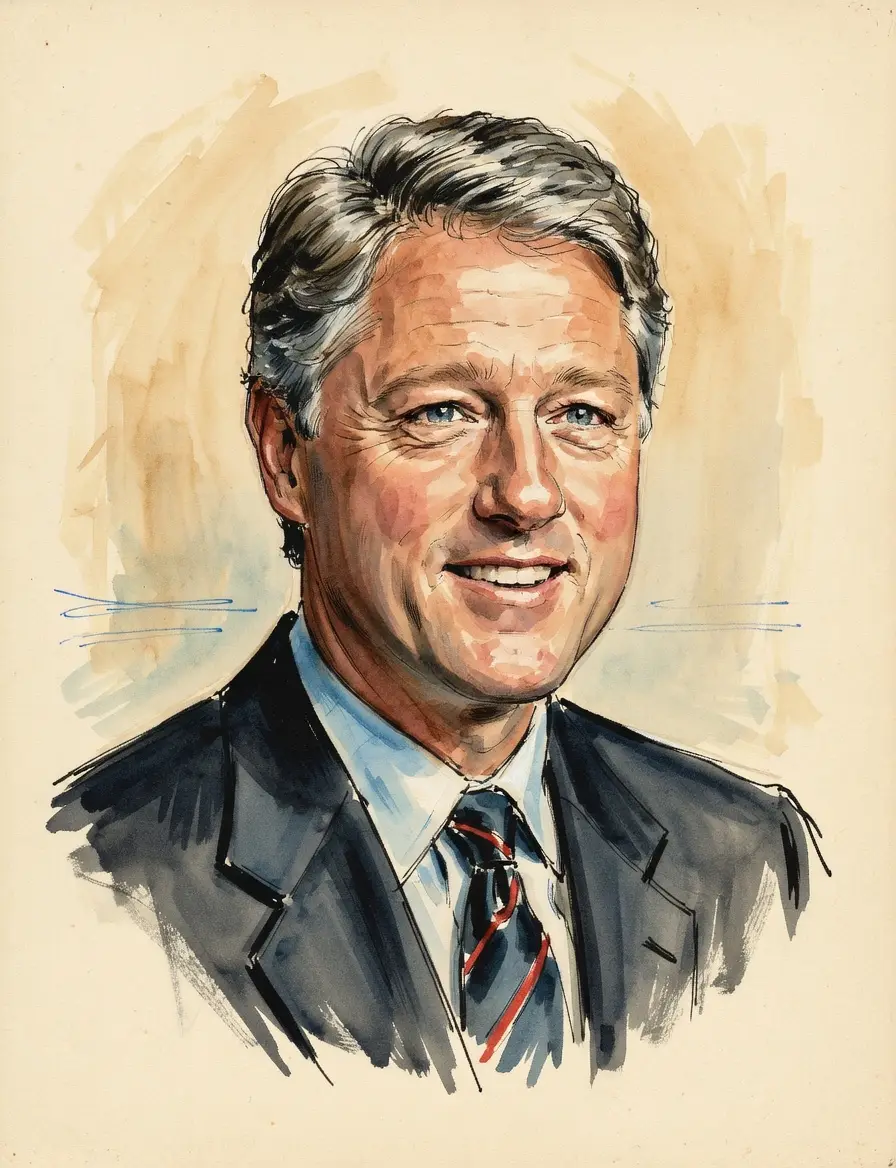
Bill Clinton on China
TL;DR
Bill Clinton strongly advocated for China's integration into the global economy, hoping it would foster internal liberalization and positive change.
Key Points
He signed the United States–China Relations Act of 2000 into law on October 10, 2000, granting China permanent normal trade relations status.
In a 2000 speech, he asserted that China's WTO membership would move the country further in the right direction over time.
In 1993, he issued an executive order linking renewal of China's Most Favored Nation status to several human rights conditions before later reversing that position in May 1994.
Summary
Bill Clinton's core position centered on economic engagement with China, culminating in his administration’s successful push for the nation's entry into the World Trade Organization (WTO). He argued that welcoming China into the international community, rather than isolating it, was the most significant opportunity to positively influence its trajectory over time. The former president expressed hope that economic liberalization would inevitably lead to greater political freedom, noting that opening markets would reduce the government's control over citizens' lives and accelerate internal reform. His administration supported this policy as being clearly in America's national interest, expecting open markets for U.S. goods and services, while viewing the human rights concern as secondary to the long-term potential for internal transformation.
His approach, often termed "constructive engagement," marked a shift from earlier policies that tied trade status to specific human rights conditions, which he had initially pursued but later delinked in 1994. Retrospectively, Clinton acknowledged that the outcomes of globalization and China’s opening had not unfolded exactly as expected, noting a more hopeful outlook on the rate of political change he had predicted. Critics pointed out that this engagement strategy was too lenient, failing to secure adequate human rights progress or prevent economic challenges like intellectual property theft, leading to a legacy that is now viewed with considerable reappraisal regarding the balance between trade and security.
Key Quotes
"Membership in the W.T.O., of course, will not create a free society in China overnight or guarantee that China will play by global rules," Clinton said that day. “But over time, I believe it will move China faster and further in the right direction."
Frequently Asked Questions
Bill Clinton's primary goal was to integrate China into the global economic system, specifically by securing its entry into the WTO. He believed this engagement was the best leverage to encourage positive internal changes, including greater openness and respect for global rules over the long term.
The former president believed that economic liberalization resulting from WTO membership would inevitably foster political change, suggesting that individuals gaining economic power would eventually demand a greater say in governance. However, he also stated that WTO membership alone would not create a free society overnight.
Initially, President Clinton linked the renewal of China's trade status to human rights progress through an executive order in 1993. However, he reversed course in 1994, de-linking Most Favored Nation status from human rights to better pursue other U.S. interests.
Sources7
Bill Clinton in late 1990s predicted China would eventually replace US as 'biggest economy,' new book reveals
United States–China Relations Act of 2000 - Wikipedia
What Did Bill Clinton Say about China's WTO Entry? – International Economic Law and Policy Blog
The Tragic Legacy of Bill Clinton's China Doctrine - Policy Magazine
President Clinton's Visit To China In Context - Human Rights Watch
The Vote that Changed the World - Baron Public Affairs
Clinton's Sorry Excuse for a China Policy | Carnegie Endowment for International Peace
* This is not an exhaustive list of sources.