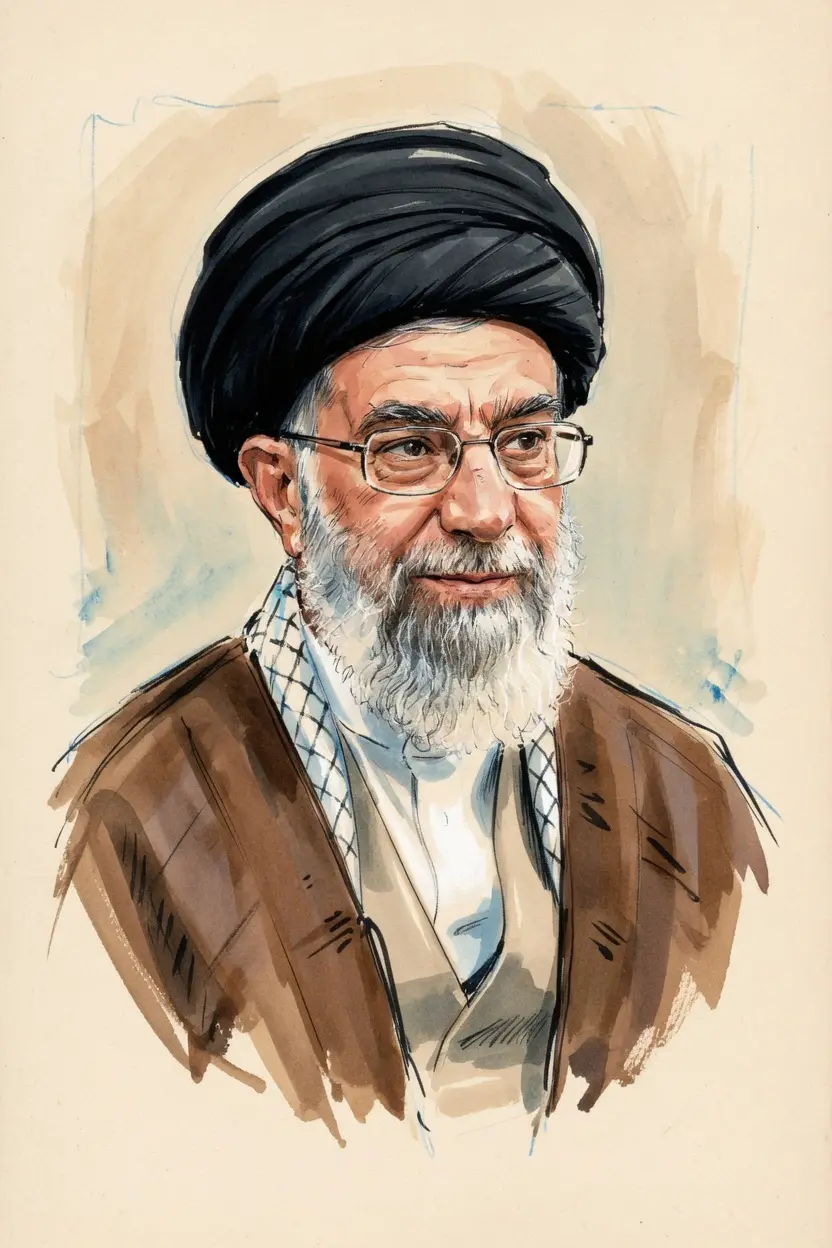
Ayatollah Ali Khamenei on Islamic Republic Governance
TL;DR
Ayatollah Ali Khamenei's position centers on the supremacy of the Supreme Leader and the clerical guardianship within the Islamic Republic's structure.
Key Points
Ultimate authority rests with the Supreme Leader, who appoints key officials and oversees the military and judiciary.
The governing structure is intentionally designed to integrate theocratic oversight through bodies like the Guardian Council over elected institutions.
The system has institutional mechanisms, such as a Leadership Council, prepared for continuity in the event of the Supreme Leader’s removal.
Summary
Ayatollah Ali Khamenei's position on Islamic Republic Governance is defined by his role as the ultimate arbiter, whose authority stems from the doctrine of velayat-e faqih, or the guardianship of the Islamic jurist. This principle vests supreme authority in his office, allowing him to oversee and have the final word on all critical state matters, including the judiciary, military, and foreign policy. The governance structure he presides over is a deliberate integration of theocratic oversight, embodied by unelected bodies such as the Guardian Council and the Assembly of Experts, with limited republican features like the elected president and parliament, which remain subordinate to his final judgment.
The system he champions is designed to ensure continuity and ideological conformity, even against shocks like the assassination of a leader, utilizing a layered security architecture and a council of senior clerics to transition authority swiftly. This structure inherently prioritizes divine providence as the main source of legitimacy over popular will, positioning the Supreme Leader as the chief force maintaining the precarious balance between the system's theocratic foundation and its republican elements. Those within the system are generally categorized by their alignment with pragmatic or radical interpretations of this theocratic foundation.
Frequently Asked Questions
Ayatollah Ali Khamenei views the governance structure as one where his position as Supreme Leader is paramount, deriving from the doctrine of velayat-e faqih. He insists that the theocratic oversight bodies must always maintain control over elected branches to preserve the system's foundational Islamic principles.
The core theological and constitutional position regarding the Supreme Leader's ultimate authority has remained consistently strong since he assumed leadership in 1989. However, the practical management of factional politics has seen adjustments to balance the theocrats against republican currents.
Following the targeted assassination of Ayatollah Ali Khamenei, the structure proved its resilience as pre-planned contingencies were activated, including the swift formation of a Leadership Council. This demonstrated the system’s design to function coherently without a single leader at the helm.
Sources4
The intelligence failure that reshaped the Middle East
Chapter 2 - The forces influencing Iranian political life - Canada.ca
Khamenei's death: Have US, Israel achieved their goals, or is Iran unbreakable?
Religio-Political Currents and Organizations in Iran - Grokipedia
* This is not an exhaustive list of sources.