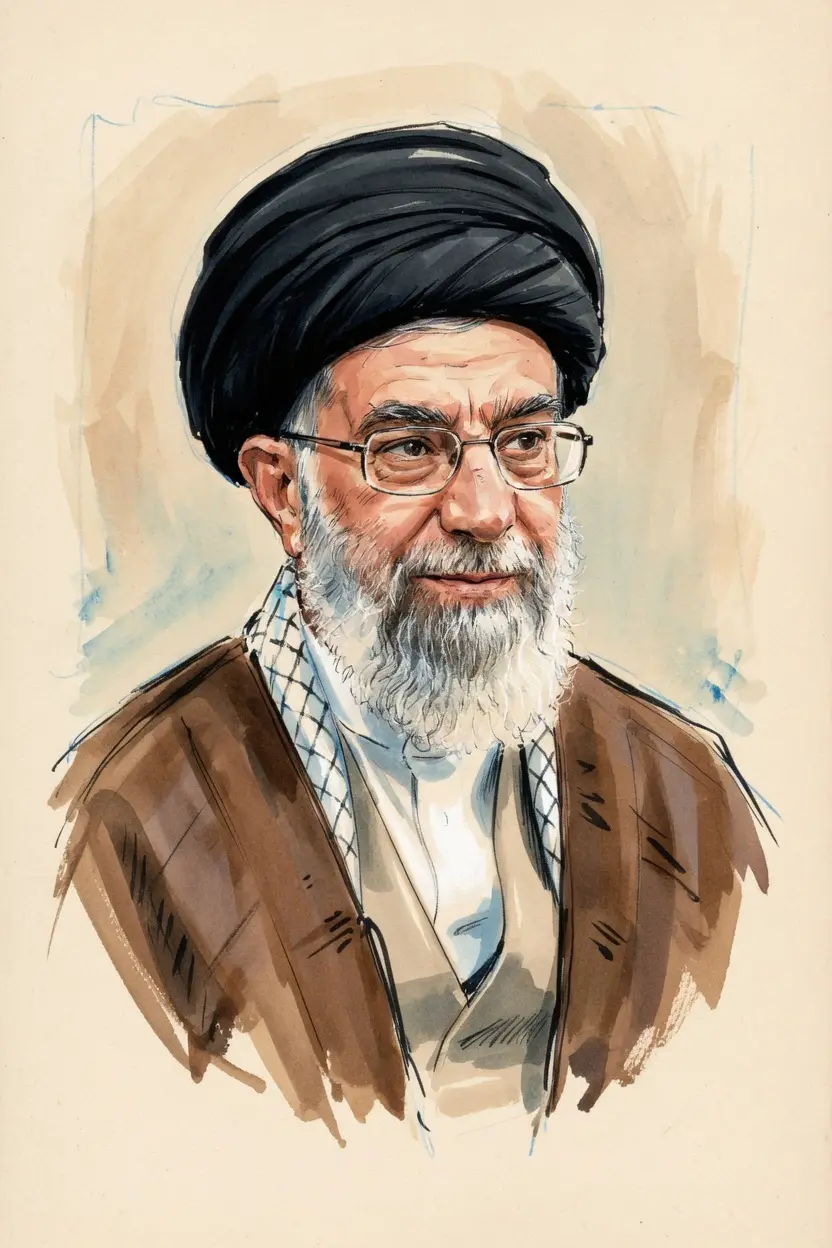
Ayatollah Ali Khamenei on India-Iran Relations
TL;DR
Ayatollah Ali Khamenei consistently criticized India for its domestic policies, especially regarding Kashmir and minority rights.
Key Points
He appealed to Muslims worldwide to support the freedom struggle in Kashmir in 2010, leading India to summon the acting Iranian ambassador.
Following the August 2019 abrogation of Article 370, he publicly urged India to adopt a "just policy" on Kashmir.
In March 2020, he tweeted about the Delhi riots, warning of "isolation from the world of Islam" and prompting an official Indian protest.
Summary
Ayatollah Ali Khamenei's position on India-Iran relations was largely defined by his vocal condemnation of specific Indian domestic policies, which he framed as detrimental to Muslims. He frequently commented on India's internal affairs, specifically urging for a "just policy" on Kashmir following the abrogation of Article 370 in August 2019. Furthermore, he publicly called for India to "confront extremist Hindus" amid the Delhi riots in March 2020, describing the violence as a "massacre of Muslims." These statements prompted official rebukes from New Delhi, with the Ministry of External Affairs summoning Iranian envoys multiple times to reject the remarks as interference in India's internal matters.
This critical stance from the Supreme Leader contrasted with the underlying strategic and economic ties maintained by the Iranian and Indian governments, such as collaboration on the Chabahar port project. His comments on Kashmir in 2010 and later remarks in September 2024, which placed India alongside other regions of concern in a social media post, contributed to diplomatic strain. The Iranian leadership, guided by his views, often sees itself as a global leader for Shiites, which informed its interventionist posture on issues perceived as affecting Muslims in India.
Frequently Asked Questions
Ayatollah Ali Khamenei's position was characterized by strong criticism of India's internal affairs, particularly concerning Kashmir and the treatment of minorities. While diplomatic and economic ties persisted, his vocal condemnations created significant tension in the bilateral relationship. He consistently framed the relationship through the lens of protecting global Muslim interests.
Yes, he frequently criticized India's domestic policy and statements were seen by New Delhi as interference. He made explicit comments regarding the situation in Kashmir following constitutional changes. He also commented strongly on the violence during the Delhi riots.
India consistently rejected his remarks as unwarranted interference in its sovereign domestic affairs. The Ministry of External Affairs summoned Iranian envoys on multiple occasions to formally lodge protests against his statements. Despite these diplomatic frictions, functional cooperation, such as on infrastructure, continued.
Sources4
The War on Iran, and India
India-Iran relations beyond Khamenei and ongoing war
India–Iran relations
US-Israel vs Iran war: What explains India's silence on ...
* This is not an exhaustive list of sources.