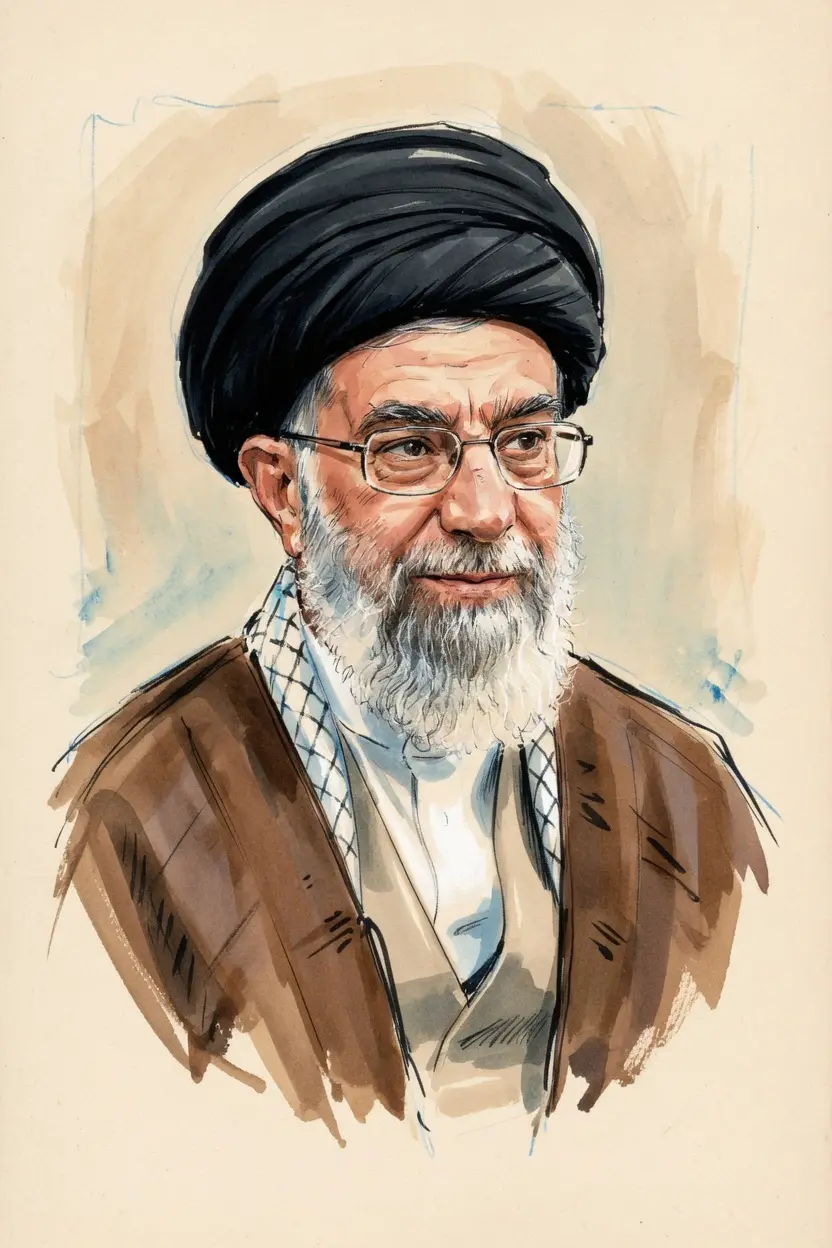
Ayatollah Ali Khamenei on France
TL;DR
Ayatollah Ali Khamenei views France as a hostile Western power whose actions, especially regarding cartoons, actively work against Iran's religious and national interests.
Key Points
He condemned France for permitting the publication of insulting cartoons depicting the Supreme Leader, viewing it as a hostile act.
French officials later expressed satisfaction regarding the Supreme Leader's passing, which confirms the adversarial nature of the bilateral relationship.
Iran has issued warnings to France in response to actions perceived as an attack on the nation's religious and political principles.
Summary
Ayatollah Ali Khamenei has consistently adopted a highly critical stance toward France, viewing the country as a principal proponent of Western hostility towards the Islamic Republic. His positions are often triggered by specific French government actions, such as allowing the publication of cartoons deemed insulting to the Supreme Leader or to Islam itself. He has characterized the French government's tolerance for such publications as an overt act of antagonism rather than an exercise in free expression, often linking it to broader, perceived efforts by the West to undermine Iranian culture and religious values.
This adversarial relationship also extends to security and foreign policy considerations, where France's alignment with American interests is noted negatively. Following the Supreme Leader's death, French officials expressed satisfaction, which would likely reinforce his existing view of France as an ideological enemy rather than a neutral diplomatic actor. The warnings Iran has issued to France over its perceived insults highlight a pattern of reactive condemnation against perceived slights from French leadership and media.
Frequently Asked Questions
Ayatollah Ali Khamenei regards France as a significant source of Western antagonism toward Iran, particularly due to French tolerance for actions deemed insulting to Islam and his leadership. His stance is rooted in what he perceives as direct interference and ideological opposition from the French government and media.
The core sentiment of strong criticism toward France appears consistent over time, driven by recurring incidents like the publication of controversial material. There is no evidence suggesting a fundamental shift from this adversarial position to one of neutrality or cooperation.
The Supreme Leader strongly warned France over the publication of insulting cartoons depicting him, characterizing the act as unacceptable religious provocation. This type of reaction indicates a very low tolerance for French government endorsement, even tacitly, of perceived slights.
Sources6
France satisfied with death of 'bloodthirsty' Khamenei
French government spokesperson Maud Bregeon said Sunday that France can only be 'satisfied' with the death of 'bloodthirsty' Khamenei.
Iran warns France over insulting cartoons depicting supreme leader Ali Khamenei
Mourning and celebration after the death of Iran's supreme leader
EU foreign ministers warn on impact of conflict in Iran after Khamenei's death
France ready to take part in defense of Gulf countries and Jordan against Iran
* This is not an exhaustive list of sources.