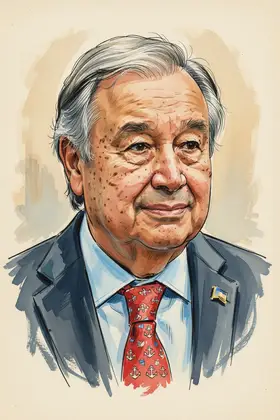
António Guterres on UN Reform
TL;DR
António Guterres is strongly committed to modernizing the UN through comprehensive, ongoing reforms to boost efficiency and public trust.
Key Points
He launched the UN80 Initiative in March 2025 as a moment to expand ongoing reform efforts with greater urgency and ambition.
The reform of the development system (UNDS), endorsed in 2018, created empowered Resident Coordinators leading single strategic frameworks for development assistance.
A key management pillar reform aims to increase mandate implementation speed by delegating decision-making powers closer to the field and simplifying human resources.
Summary
António Guterres prioritises UN reform to ensure the Organization remains effective, cost-efficient, and responsive to the people it serves, framing these efforts as essential for delivering tangible improvements in peace, development, and humanitarian aid. Since taking office in 2017, he has driven a comprehensive agenda focusing on simplifying procedures, decentralizing decision-making, enhancing transparency, and improving data and digital capacity to modernize the UN structures for the 21st century. The current push, embodied by the UN80 Initiative launched in March 2025, builds upon previous efforts like the Pact for the Future and UN 2.0, demanding greater urgency and ambition to assess the UN’s fitness for purpose.
These reforms are also directly linked to addressing the significant fiscal headwinds the Organization faces, stemming from a persistent liquidity crisis caused by Member States paying assessed contributions late or not in full. The stated goal is to ensure that public funds, underwritten by hardworking taxpayers, are used wisely and transparently, moving the UN away from a culture of process toward a culture of results. The reform agenda includes identifying efficiencies, reviewing mandate implementation, and undertaking strategic reviews for structural changes and programme realignment, all while consulting closely with Member States for guidance on changes within the Secretary-General's authority and those requiring their decisions.
Frequently Asked Questions
António Guterres's current focus for UN Reform is primarily encapsulated in the UN80 Initiative, which aims to modernize the organization for the 21st century. He emphasizes making the UN more effective and cost-efficient to better serve people and ensure taxpayer money is used transparently. This initiative builds upon his ongoing agenda to streamline operations and improve delivery across peace, development, and humanitarian pillars.
The initial reform agenda proposed by António Guterres was built upon three main pillars: development, peace and security, and management. The development pillar focused on reforming the UN Development System (UNDS) to be more coherent and locally responsive. The peace and security pillar prioritized prevention and enhanced the effectiveness of peacekeeping operations. The management pillar sought to shift the culture towards results by simplifying processes.
The Secretary-General is pushing for reform now, especially through the UN80 Initiative, to address a significant liquidity crisis partly caused by delayed member state payments. He stresses that reform is essential to maintain the organization's effectiveness and public confidence amid current global challenges. He sees the UN's 80th anniversary as a prime moment for this modernization.
Sources7
Guterres prioritises UN reform to ensure taxpayers' money reaches those in need | UN News
Guterres, on the eve of UN’s 80th anniversary, outlines blueprint for the future
We must build Reform Capacity into the UN's Operating System to Break the Cycle of Empty UN Reforms | International Organization and United Nations Studies Specialization (IOUNS)
It's Time for the UN to Move Beyond the Language of Crisis | United Nations University
UN80: The U.S. Can Help Shape the UN's Biggest Reform Yet - Better World Campaign
UN Reform: Don't Put the Cart Before the Horse - PassBlue
The UN Reform - France ONU
* This is not an exhaustive list of sources.