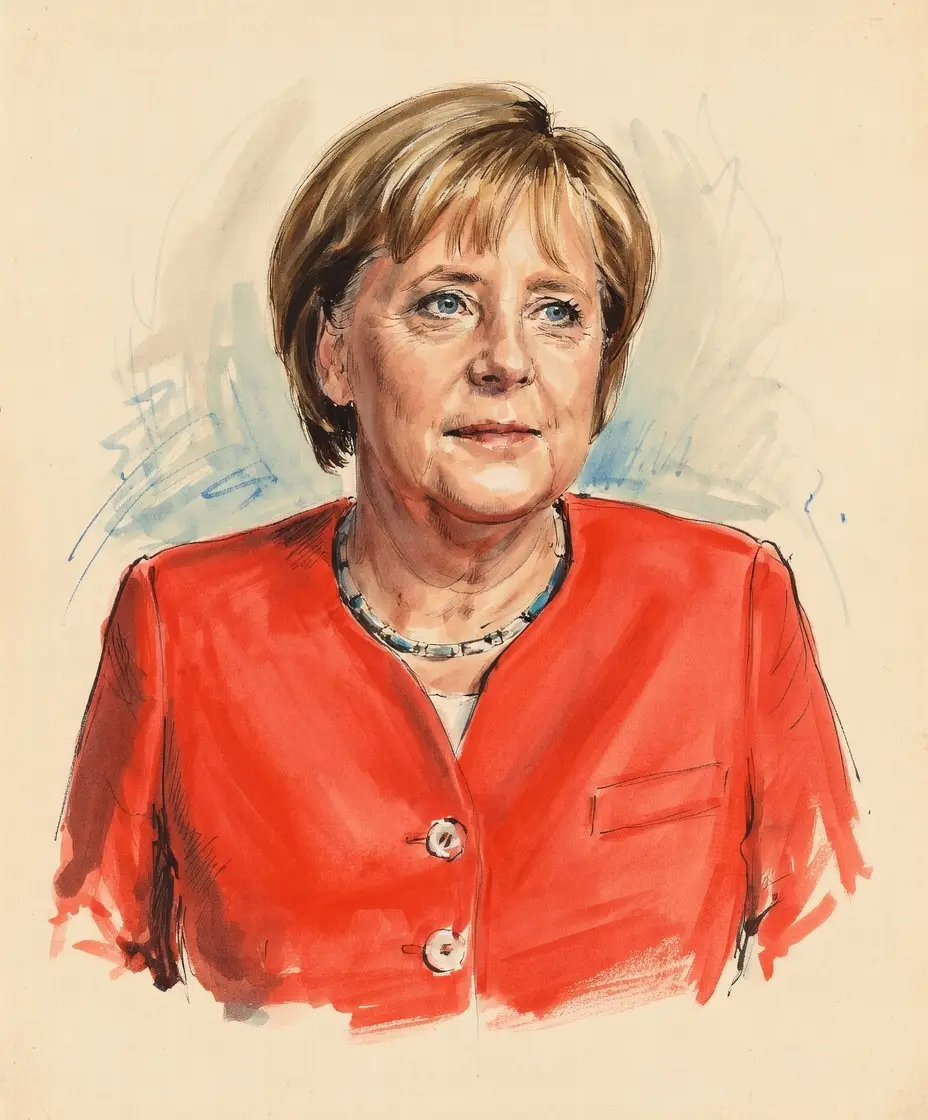
Angela Merkel on Presidential Legacy
TL;DR
Angela Merkel tends to view presidential legacy through a lens of pragmatic international relations and adherence to established norms.
Key Points
The chancellor emphasized stability and pragmatism while in office, which implicitly guides views on successful executive tenure.
She reportedly had private concerns about the effect of a successor's transactional approach on the long-term global standing of the office.
Her approach to major international events during her tenure reflected a focus on consensus-building over singular national achievements.
Summary
Angela Merkel’s perspective on presidential legacy, particularly concerning leaders she interacted with, appears rooted in her commitment to multilateralism and pragmatic governance. While she did not focus public discourse on defining her own legacy, her private reactions and public conduct during her chancellorship suggest a belief that lasting success is built on steady international cooperation rather than unilateral action. Evidence of this perspective can be seen in her interactions with leaders whose styles diverged significantly from established diplomatic standards, implying a value placed on consistency and respect for institutional frameworks in securing a positive historical assessment.
Her tenure, which spanned numerous political shifts globally, implied that a leader's ultimate historical standing is inextricably linked to their handling of major crises and their commitment to the existing global order. The constraints she often cited in managing geopolitical issues suggest an awareness that a leader’s legacy is often shaped as much by external reaction and inherited challenges as by domestic policy successes. This frames legacy not as a self-determined narrative but as a complex calculus of sustained international stability and the successful navigation of political turbulence.
Key Quotes
We have discussed Russia’s participation (in G7). In my view, there is a need for significant progress in the implementation of the Minsk Agreements [concerning a resolution to the conflict in Ukraine], so for now I don’t see any possibility of Russia’s participation.
German Chancellor Angela Merkel has called multiculturalism an absolute failure.
Frequently Asked Questions
Angela Merkel tends to view presidential legacy through a lens of pragmatic international relations and adherence to established norms. She appeared to value consistency and stability in leadership when assessing the long-term standing of executives. Her focus was often on the diplomatic outcomes achieved during her own time as chancellor.
The former chancellor generally avoided focusing public discourse on defining her own legacy while in office. Her perspective appears more evident in her actions and private reactions to the conduct of other world leaders. She prioritized effective governance over crafting a historical narrative for herself.
Her conduct and reported private concerns suggested that leaders who significantly diverge from established diplomatic standards risk a less positive historical assessment. She appeared to favor multilateralism, implying that a legacy built on unilateral action is viewed with skepticism. This points to a belief that positive standing requires respecting institutional frameworks.
Sources4
How world leaders reacted privately to Trump's election
A World of Constraints
Obama’s Legacy in Question
Recent scandals show Obama’s inattention to detail may cripple his presidential legacy
* This is not an exhaustive list of sources.