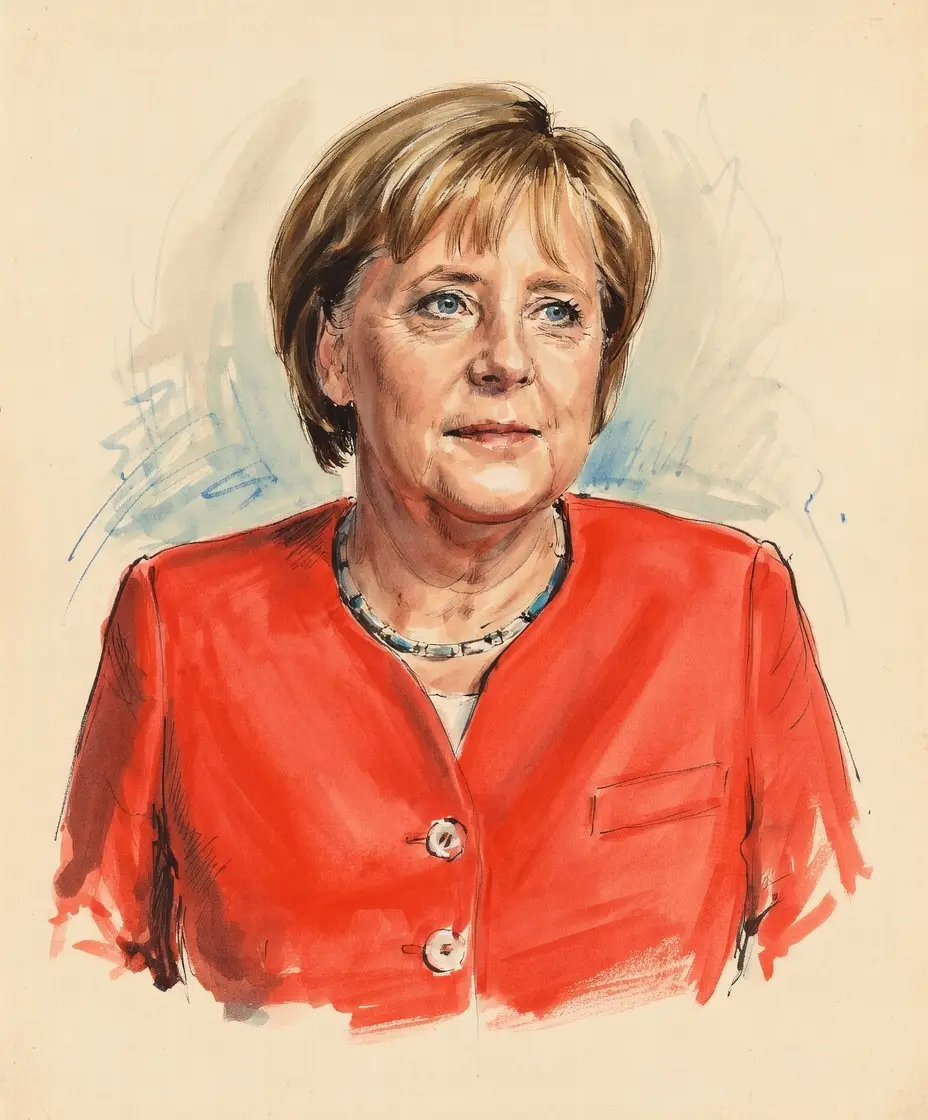
Angela Merkel on Political Ideology
TL;DR
Angela Merkel strategically cultivated a centrist political ideology by adopting policies from across the spectrum to maintain stability.
Key Points
She was a member of the center-right Christian Democratic Union (CDU), governing through multiple coalitions.
Her handling of crises sometimes involved adopting center-left policies, which eroded support among the CDU's traditional base.
The political style employed during her tenure has been described as a technocratic approach, sometimes utilizing the slogan “There is no alternative.”
Summary
Angela Merkel, a member of the center-right Christian Democratic Union (CDU), was known for carefully cultivating the politics of the center during her long tenure as Chancellor. She strategically adopted policy prescriptions from the center-left, sometimes borrowing from the playbook of figures like Tony Blair and Bill Clinton, to forge a “center-right Third Way.” This approach was aimed at bridging the political middle ground and simultaneously containing opposition from both the far-left and the far-right Alternative for Germany (AfD). However, this centrist maneuvering sometimes led to disillusionment among traditional conservative CDU voters, who felt she had drifted too far left, citing decisions like the phase-out of nuclear energy and the embrace of refugees in 2015 as key examples of this perceived shift.
Her tenure was characterized by a pragmatic governance style, often summarized by the slogan “TINA” (There is no alternative) during the Eurozone crisis, which suggested a limited room for ideological maneuvering based on perceived economic necessity and European obligations. This technocratic style of governance, while stabilizing the country for a period, simultaneously stimulated claims for greater democratic debate and fostered the growth of populist opposition. As her time in office concluded, there were indications that a shift back toward more traditional, hard-line conservative positions within her party was anticipated, signaling an end to her defined era of centrism and stability.
Frequently Asked Questions
Angela Merkel was fundamentally a member of the center-right Christian Democratic Union, identifying as conservative. However, her governing style was highly pragmatic, leading her to adopt numerous center-left policies during her time in office. This made her position difficult to classify neatly as purely conservative or purely liberal.
Yes, her position evolved significantly toward the center throughout her leadership. She strategically incorporated policies from the political center-left to maintain broad governing coalitions and manage national crises. This evolution caused some traditional conservatives to view her approach as deviating from core party ideology.
The essence of Angela Merkel's political ideology was one of pragmatism and centrism, prioritizing stability and consensus over strict adherence to one side of the spectrum. She sought to secure a durable center by preemptively addressing popular policy preferences from opposing flanks.
Sources3
The German center does not hold
Pitfalls of Discursive Depoliticisation in the Age of Populism
What are your views on Angela Merkel and Emanuel Macron? : r/SocialDemocracy
* This is not an exhaustive list of sources.