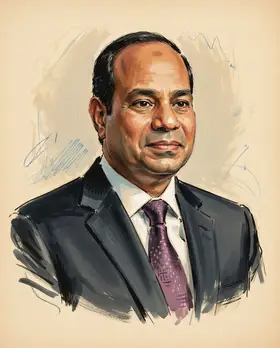
Abdel Fattah el-Sisi on Role of Military
TL;DR
Abdel Fattah el-Sisi views the military as the foundational institution to secure his rule, manage the economy, and guarantee the state's structure.
Key Points
Legislation passed in January 2024 integrated laws protecting public facilities, granting the armed forces permanent collaboration with police and jurisdiction over related crimes in military courts.
The Military Academy's role is stressed as key not just for cadets but also for qualifying cadres for state bodies, including the ministries of transport and finance, as of June 2023.
The 2019 constitutional amendments confirmed the EAF’s right to step in at its own discretion to preserve the country's political order, a right secured in exchange for extending the presidential term.
Summary
Abdel Fattah el-Sisi has cemented the Egyptian Armed Forces (EAF) as the core pillar of his 'Second Republic,' granting it expanded autonomy and a central role across political, economic, and security spheres. His approach fundamentally breaks with predecessors by embedding the military deeply into state administration and capitalism, effectively creating a military guardianship where civilian institutions are sidelined or brought under direct control. This elevation of the armed forces is designed to secure his personal control, as he is seen to respect and empower the military institution above all others, viewing it as the only entity capable of implementing his will on the nation.
This militarization of the polity and economy is characterized by granting the EAF and its associated agencies immense economic stakes, managing massive infrastructure projects, and enjoying extensive legal and financial immunities that place them beyond effective civilian oversight. Furthermore, the constitutional amendments of 2019 confirmed the military's right to intervene to preserve the political order at its own discretion, demonstrating that the regime's stability is intrinsically linked to the military's continued institutional primacy and loyalty, which is secured through patronage and economic rewards.
Frequently Asked Questions
Abdel Fattah el-Sisi considers the military the only institution he respects and empowers to impose his will on the nation, seeing it as the ultimate guarantor of the state. This position is central to his governance model, known as the Second Republic. He has significantly expanded the military's economic and political footprint since taking office.
Under Sisi, the military has become a primary economic actor, leading massive infrastructure projects and expanding into diverse commercial sectors like construction, food production, and real estate. This military economy operates with significant legal insulation and is a key mechanism for ensuring loyalty within the officer corps through patronage.
Yes, Sisi has overseen laws that reinforce the military's privileged status, including constitutional amendments confirming its right to intervene in politics and legislation expanding the jurisdiction of military courts over civilians in certain cases. This institutional status is viewed as essential for maintaining domestic stability.
Sources7
Dictators and Autocrats; Securing Power across Global Politics
The Second Republic: Remaking Egypt Under Abdel-Fattah el-Sisi
The Rising Clout of the Egyptian Military: From Emergency to Militarization
Sisi stresses key role of Military Academy
Egypt's intervention in Sudan's war – Ayin network – شبكة عاين
Egypt and the United States: back to business as usual
* This is not an exhaustive list of sources.