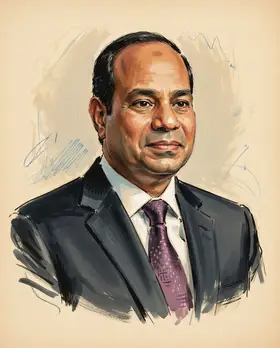
Abdel Fattah el-Sisi on Economic Policy
TL;DR
Abdel Fattah el-Sisi maintains that ongoing, difficult economic reforms are unavoidable and necessary for Egypt's long-term progress and stability.
Key Points
He has defended recent economic measures as necessary and irreplaceable, stating there is no other solution than the current path of work, reform, and endurance.
The president initiated comprehensive policies including fiscal consolidation, energy subsidy reforms, and targeted cash programs like Takaful and Karama, starting in 2014.
He called for an end to indiscriminate imports, such as cheese and perfumes, criticizing their contribution to the dollar crisis in an October 2024 speech.
Summary
Abdel Fattah el-Sisi's economic policy centers on the continuation of a comprehensive reform program, which he asserts is the only viable path to resolve acute national economic imbalances and secure a better future. He has frequently defended measures such as subsidy cuts and fiscal consolidation, arguing they are necessary, though difficult, steps to establish a new foundation for sustainable growth, encourage private sector investment, and move away from what he views as wasteful spending. The president frames these structural changes as a complete re-engineering of the economic apparatus, which must build upon previous achievements in infrastructure and fiscal stability, despite acknowledging the current hardship faced by citizens due to rising prices.
This ongoing reform agenda is marked by the establishment of a 'new republic' ethos of 'nothing for free' and a significant expansion of state capitalism, primarily driven by military-affiliated agencies, which critics argue has led to increased inequality and reliance on external financing. While the president has pointed to past successes like the New Suez Canal project and initial fiscal adjustments, his government faces continuous pressure from external partners, like the IMF, to pursue deeper structural changes, particularly regarding the military's economic role. He balances the need for austerity with social protection programs, though the allocation of resources towards megaprojects continues to be a defining feature of this economic vision.
Key Quotes
The difficult economic conditions the country is experiencing cannot be resolved except through the current path based on work, reform, and shared endurance
If progress, prosperity and development come at the price of hunger and deprivation, Egyptians, do not shy away from progress! Don't dare say: 'It is better to eat.'
Frequently Asked Questions
Abdel Fattah el-Sisi is a strong advocate for the continuation of his government's economic reform program. He maintains that the path involving austerity and structural adjustment is unavoidable for Egypt to achieve long-term macroeconomic stability and sustainable growth.
Yes, the president has publicly acknowledged the severe economic difficulties facing the nation, including the suffering caused by rising prices and inflation. He claims to remain part of the Egyptian people and understands their struggles, while simultaneously urging public endurance.
He has urged citizens to increase their economic awareness and share the responsibility for confronting national challenges, emphasizing that effort and perseverance are required to improve the situation. He has sometimes framed national progress as being worth enduring hunger or deprivation.
Sources8
Egypt's Sisi acknowledges economic hardship, urges public endurance amid rising prices – Middle East Monitor
The Second Republic: Remaking Egypt Under Abdel-Fattah el-Sisi | Carnegie Endowment for International Peace
Sisi to DailyNews Egypt: Economic reforms will continue to build on achievements
The outsider threat: how economic policy could endanger Sisi's rule in Egypt
Sisi's vision has crippled Egypt, a nation teetering on the brink of economic ruin | Middle East Eye
Behind the Rhetoric: Egypt's 'War Economy' - Al-Estiklal Newspaper
Unraveling Egypt's political economy puzzle: It's more than just economics
Egypt Is in Serious Trouble Seven Decades after Its Free Officers Revolution
* This is not an exhaustive list of sources.